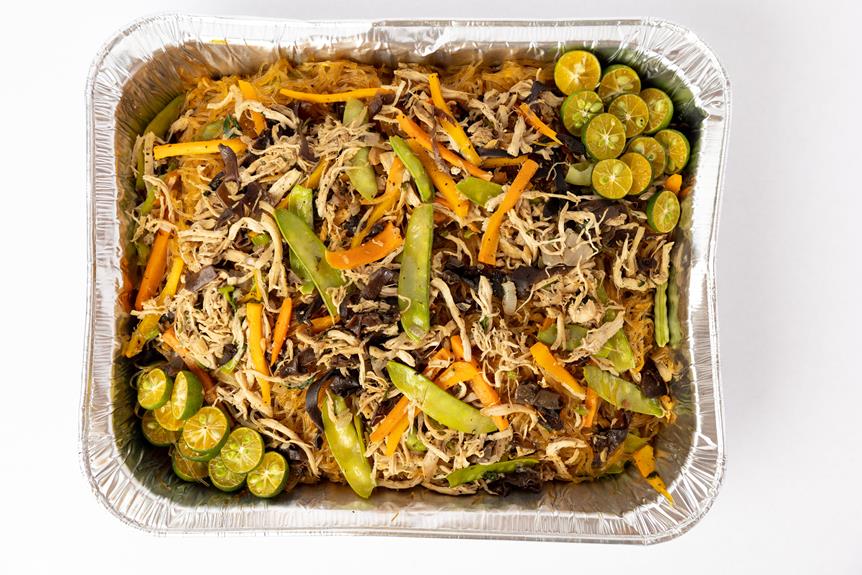
The 5 best noodles for Philippine Pancit recipes are rice noodles (Bihon, Malabon, and Luglug), mung bean starch noodles (Sotanghon), and egg noodles (Canton) . Each noodle type offers a unique texture and flavor profile, enhancing the traditional Filipino pancit dishes.
Key Takeaways
- Pancit dishes are an integral part of traditional Filipino cuisine and are commonly served during celebrations and gatherings.
- Different types of noodles, such as rice noodles (Bihon, Malabon, and Luglug) and mung bean starch noodles (Sotanghon), are used in pancit recipes, offering a variety of textures and flavors.
- Pancit Bihon and Pancit Canton are versatile recipes that allow for personalization and unique preparations, with Pancit Bihon symbolizing long life and good fortune.
- Pancit Malabon is a seafood-infused twist on the classic pancit dish, featuring thin rice noodles, mixed vegetables, and an assortment of seafood, reflecting the coastal flavors of Malabon.
Pancit Bihon
What makes Pancit Bihon a beloved and symbolic dish in Filipino culture?
Pancit Bihon holds a special place in Filipino cuisine as a flavorful representation of tradition and celebration. The dish features delicate rice noodles, tender chicken, a savory sauce made with soy sauce and garlic, and an assortment of vibrant vegetables. This combination creates a harmonious blend of textures and flavors, making it a favorite among Filipinos and a staple at gatherings.
The versatility of the recipe allows for personal touches, making each preparation unique. Whether it’s a birthday, a wedding, or a simple family gathering, Pancit Bihon brings people together to enjoy a dish that signifies long life and good fortune.
Its significance in Filipino culture extends beyond its delicious taste, embodying warmth, hospitality, and the joy of communal dining.
Pancit Canton
When preparing Pancit Canton, you’ll find that its thicker egg noodles provide a hearty and satisfying base for a variety of flavorful ingredients and seasonings. This Filipino food staple is best prepared through a stir-fry method, incorporating soy sauce, oyster sauce, and minced garlic for a burst of savory flavors.
The versatility of Pancit Canton allows for the addition of assorted meats, vegetables, and seasonings according to personal preference. The noodles’ robust texture makes them perfect for absorbing the rich flavors of the dish. Here’s a table showcasing basic ingredients for a delicious Pancit Canton recipe:
| Ingredient | Description |
|---|---|
| Soy Sauce | Adds savory depth |
| Oyster Sauce | Enhances umami flavor |
| Minced Garlic | Provides aromatic essence |
Pancit Canton’s thicker noodles offer a delightful chewiness, making it a perfect choice for those seeking a more substantial and satisfying noodle dish.
Pancit Malabon
Pancit Malabon, in contrast to the heartiness of Pancit Canton’s thicker noodles, offers a seafood-infused twist on the classic Filipino dish, showcasing a rich and flavorful sauce that sets it apart from other pancit variations.
This Filipino pancit recipe traditionally uses thin rice noodles, also known as bihon noodles or rice vermicelli. The dish often includes an array of mixed vegetables and an assortment of seafood such as shrimp, crab, and squid, creating a delightful medley of flavors.
Additionally, Pancit Malabon can feature chicken thighs, further enhancing its savory profile. The vermicelli noodles play a crucial role in absorbing the robust seafood and meat-infused sauce, resulting in a delectable and satisfying dish that reflects the coastal flavors of Malabon.
Pancit Luglug
Drenched in a rich, flavorful sauce made from shrimp broth and annatto, Pancit Luglug showcases the vibrant culinary heritage of Filipino cuisine. When preparing this traditional Filipino noodle dish, it’s essential to use thick rice noodles to soak up the savory shrimp-flavored sauce.
The noodles are typically topped with shrimp, crushed pork rinds (chicharon), hard-boiled eggs, and green onions, adding layers of texture and taste to the dish. The vibrant orange color of the noodles comes from the sauce, which is made from shrimp broth, annatto, and flour.
Pancit Luglug is a beloved dish often served during fiestas, family gatherings, and celebrations in the Philippines, making it an authentic recipe that encapsulates the rich flavors of Filipino cuisine. To enhance the dish’s flavor, fish sauce is commonly used in the recipe.
– Can the Noodles for Pancit Recipes be Used in Affordable Filipino Noodle Dishes?
Yes, the noodles for pancit recipes can definitely be used in affordable Filipino noodle dishes. The versatile nature of these noodles makes them a great option for various dishes, allowing you to create delicious and authentic affordable Filipino noodle dishes right at home.
Sotanghon
As you explore the diverse world of Filipino noodle dishes, the Sotanghon variety stands out for its translucent, chewy texture and its ability to complement a wide range of savory ingredients and flavors. Sotanghon, also known as vermicelli, is a staple in Philippine pancit recipes, offering a gluten-free option for those with dietary restrictions. These delicate noodles are made from mung bean starch, adding a unique chewy texture to the dish.
When preparing Sotanghon, it’s crucial to soak them in warm water until they become tender but still slightly firm before incorporating them into the recipe. Sotanghon noodles are incredibly versatile and pair wonderfully with chicken, shrimp, and an array of vegetables, making them a popular choice for creating authentic Filipino pancit variations.
| Sotanghon Noodles |
|---|
| Translucent texture |
| Complements various savory ingredients |
| Gluten-free option |
| Versatile and pairs well with meats and vegetables |
| Requires soaking before use |
Frequently Asked Questions
What Kind of Noodles Are Used in Pancit?
When making pancit, you use bihon noodles, which are thin rice noodles soaked in warm water before cooking. These noodles are the perfect base for creating a flavorful and customizable dish for special occasions.
What Type of Noodles Is Used in Pancit Canton?
For Pancit Canton, use egg noodles. They’re yellow in color and absorb flavors well, making them perfect for this Filipino stir-fried noodle dish. They add a rich, hearty texture that complements the savory ingredients.
What Kind of Noodles Are Used in the Philippines?
In the Philippines, a variety of noodles are used in traditional dishes like Pancit Bihon, Pancit Canton, and Pancit Malabon. Rice noodles, egg noodles, and vermicelli are popular choices, each contributing a unique texture and flavor to the dish.
Are Pancit Noodles the Same as Chow Mein?
No, pancit noodles are not the same as chow mein. Pancit noodles are made from rice flour and water, while chow mein noodles are made from wheat flour and egg. They have different textures and are used in different cuisines.
Conclusion
So whether you’re craving the thin and delicate bihon noodles of Pancit Bihon, the thick and chewy canton noodles of Pancit Canton, or the crispy and flavorful malutong noodles of Pancit Palabok, there’s a perfect noodle for every Philippine Pancit recipe.
Experiment with different types of noodles to experience the unique textures and flavors they bring to the dish, and take your Pancit game to the next level!