Author: A. Pineda

  • What Are the Variations of Pancit Dish?

    What Are the Variations of Pancit Dish?

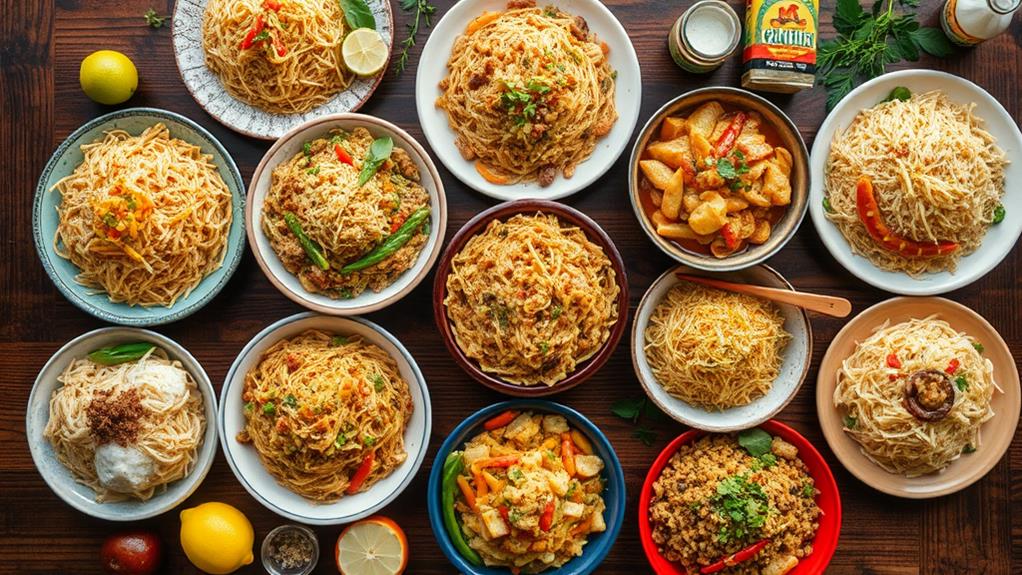
    Pancit is a diverse Filipino dish with various noodle types, flavors, and regional specialties.

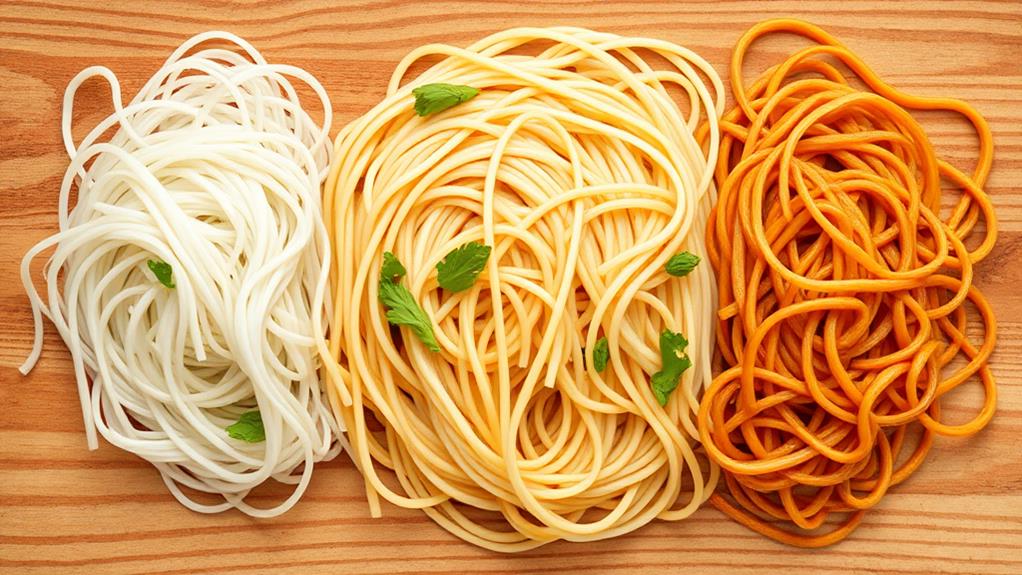
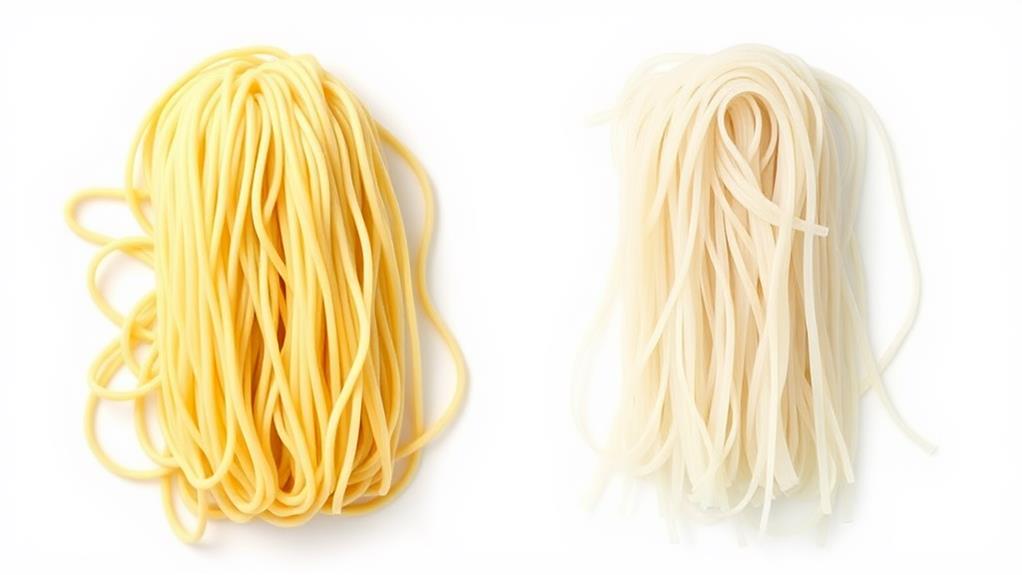
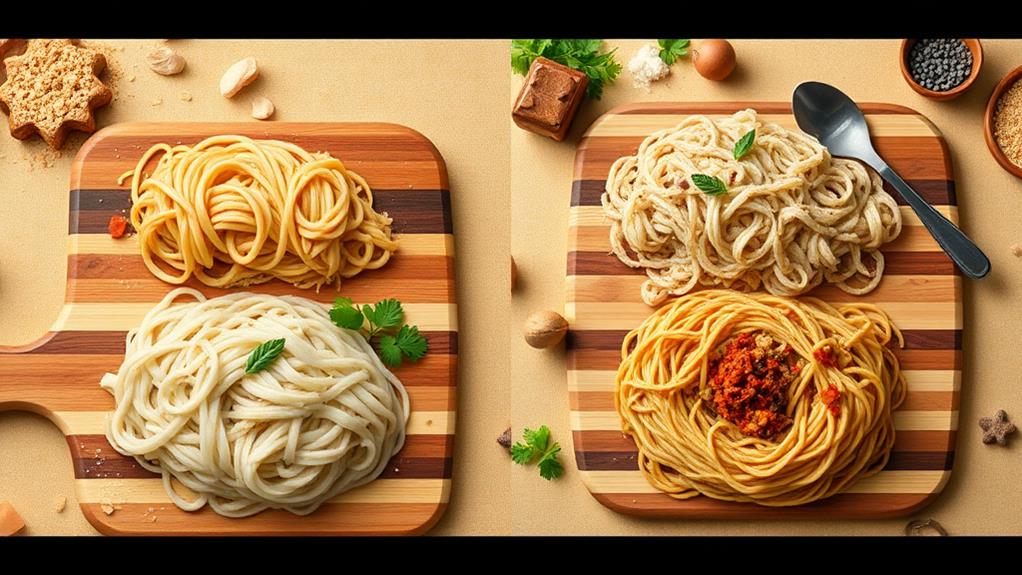
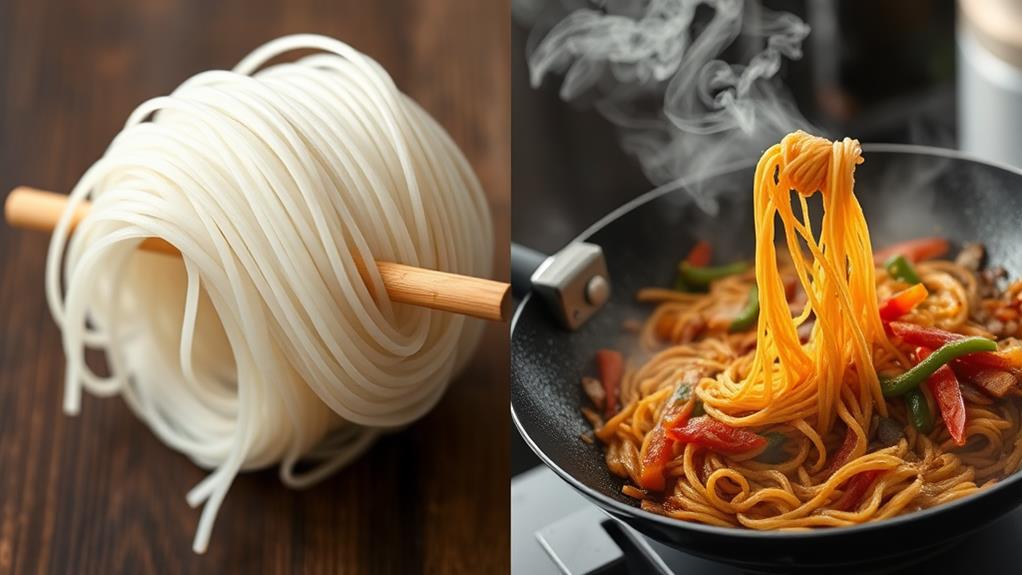
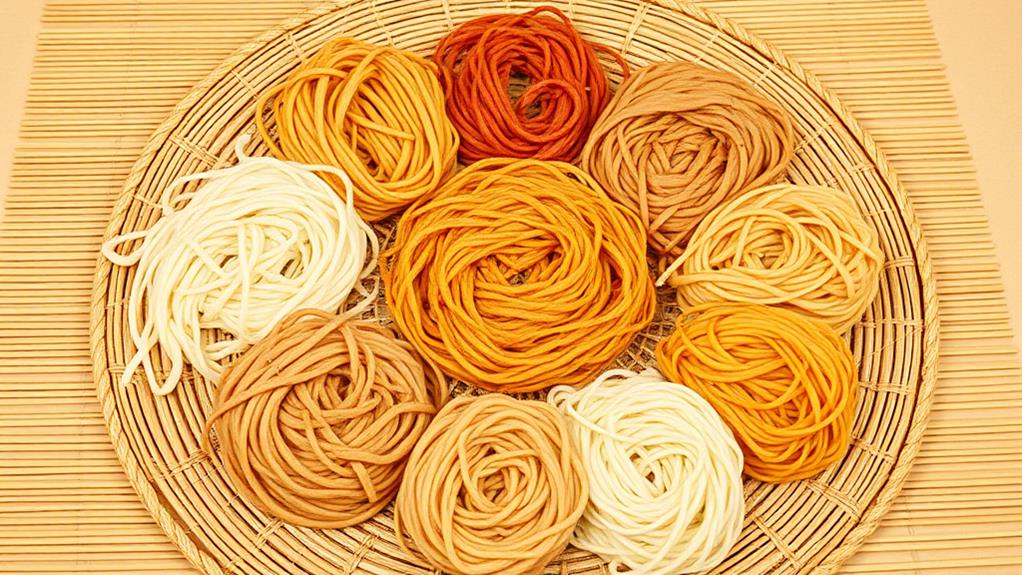
    There are several types of noodles used in pancit, each offering a unique texture and taste experience. Bihon noodles are thin, rice flour noodles; canton noodles are thicker, egg-based noodles; miki noodles are round, egg-based noodles; sotanghon noodles are cellophane noodles made from starch and water; and misua noodles are thin, wheat flour noodles.

    Some popular pancit dishes include Pancit Bihon, which uses bihon noodles and is often served with vegetables and meat or seafood; Pancit Canton, which uses canton noodles and is often served with vegetables and meat or seafood; and Pancit Malabon, which uses miki noodles and is often served with seafood and a sweet sauce.

    These dishes showcase the richness of Filipino cuisine, with regional twists in every corner of the Philippines.

    Regional variations of pancit can be found throughout the Philippines, each with its own unique cultural significance, evolution, and ingredients.

    Variations of Pancit Noodles
    diverse pancit noodle types

    Pancit noodles come in a variety of types, each with distinct textures and flavors.

    Bihon noodles, made from rice flour and cornstarch, are ideal for stir-frying and absorbing flavors from sauces. This makes them a great choice for dishes where you want the noodles to take on the flavors of the ingredients.

    Canton noodles, made from wheat and eggs, provide a chewier texture. This makes them well-suited for hearty dishes where you want a more substantial bite. Their texture also holds up well to thick sauces and heavy ingredients.

    Miki noodles are thick egg noodles available in flat or round shapes. They're commonly used in soups and stir-fried dishes where you want a more substantial bite. Their thickness also allows them to hold onto flavors and ingredients well.

    Sotanghon is a type of glass noodle made from mung bean starch. It's often used in soups and is known for its light and delicate texture. This makes it a great choice for dishes where you want a subtle noodle presence.

    Misua is an extremely thin wheat noodle. It's typically served in soups and is quick to cook, enhancing the flavor of broths in dishes like almongdigas. Its thinness also allows it to absorb flavors well, making it a great choice for soups and broths.

    History of Pancit in Philippines

    Pancit originated from Chinese merchants who introduced noodles to the Philippines. The word "pancit" is derived from Hokkien terms for "wonton" and "convenient food." This introduction led to the integration of local ingredients and cooking styles, resulting in unique Filipino adaptations of noodle dishes.

    The fusion of Chinese and Filipino cuisines is reflected in these adaptations.

    Pancit is traditionally served during significant celebrations like birthdays, symbolizing long life and prosperity. This tradition stems from Chinese customs.

    The establishment of panciterias in the Philippines marked the beginning of noodle restaurants, showcasing the growing popularity of pancit in Filipino culinary culture.

    There are over 20 distinct varieties of pancit across different regions in the Philippines, each with its own unique flavor profiles and ingredients.

    These variations showcase the diversity of Filipino cuisine. Examples include Pancit Bihon, Pancit Lugaw, and Pancit Canton.

    The rich cultural heritage and culinary creativity have shaped this beloved Filipino dish.

    Must-Try Filipino Pancit Dishes
    delicious filipino pancit varieties

    Pancit Bihon: A Popular Filipino Noodle Dish

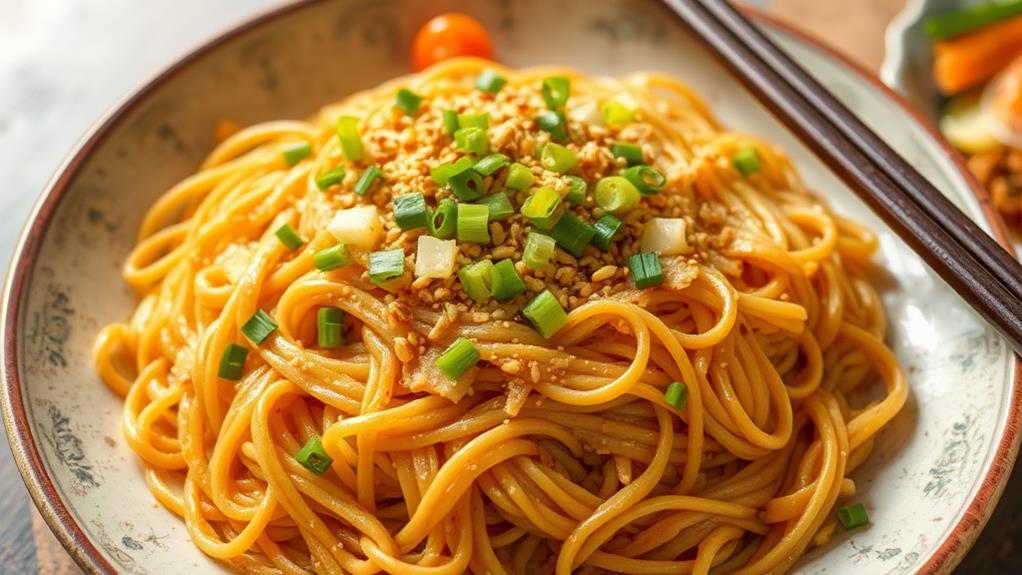
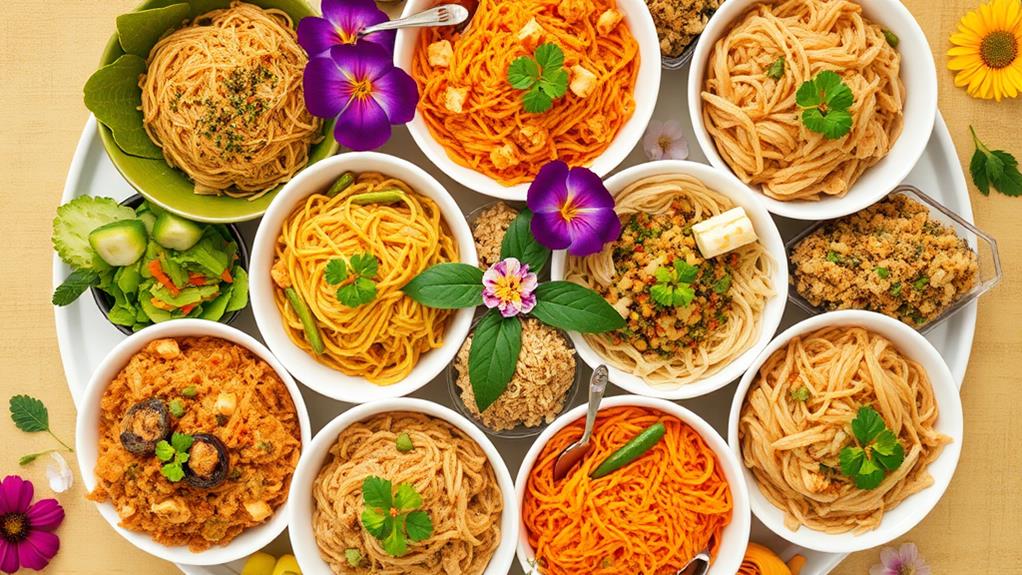
    Pancit Bihon is a staple in Filipino cuisine, made with thin rice noodles stir-fried with vegetables and meats like chicken or shrimp, and flavored with soy sauce and garlic.

    This dish is a common sight at celebrations and gatherings.

    Variations of Pancit Dishes

    Other notable pancit dishes include:

    • Pancit Canton, featuring egg noodles stir-fried with meats and vegetables, seasoned with oyster sauce and soy sauce.
    • Pancit Malabon, characterized by its thick rice noodles topped with a rich shrimp sauce and seafood.
    • Pancit Sotanghon, which uses glass noodles made from mung beans, typically cooked with chicken, mushrooms, and flavored with soy sauce and sesame oil.

    Regional Pancit Specialties

    Regional Pancit Specialties

    Across the Philippines, different regions have their own unique pancit dishes, each reflecting local culture and traditions.

    Cebu's Pancit Bam-I

    Cebu's Pancit Bam-I is a popular choice during local celebrations.

    It combines bihon and canton noodles with various meats and vegetables, making it a distinct flavor profile.

    Pancit Batil Patung in Tuguegarao

    In Tuguegarao, you'll find Pancit Batil Patung.

    It features thicker miki noodles topped with minced carabao meat, a fried or poached egg, and chicharrón.

    Pancit Kinalas in Naga City

    Naga City's Pancit Kinalas is characterized by its thick sauce and scraped meat, served with egg noodles in a flavorful broth.

    Pancit Malabon in Malabon City

    Malabon City's Pancit Malabon is known for its thick rice noodles topped with a rich seafood sauce made from shrimp paste.

    Pancit Sotanghon

    Pancit Sotanghon is made with glass noodles derived from mung beans.

    It is often served in a light chicken broth with vegetables.

    These regional varieties showcase the diversity of pancit dishes across the Philippines.

    Popular Pancit Ingredients
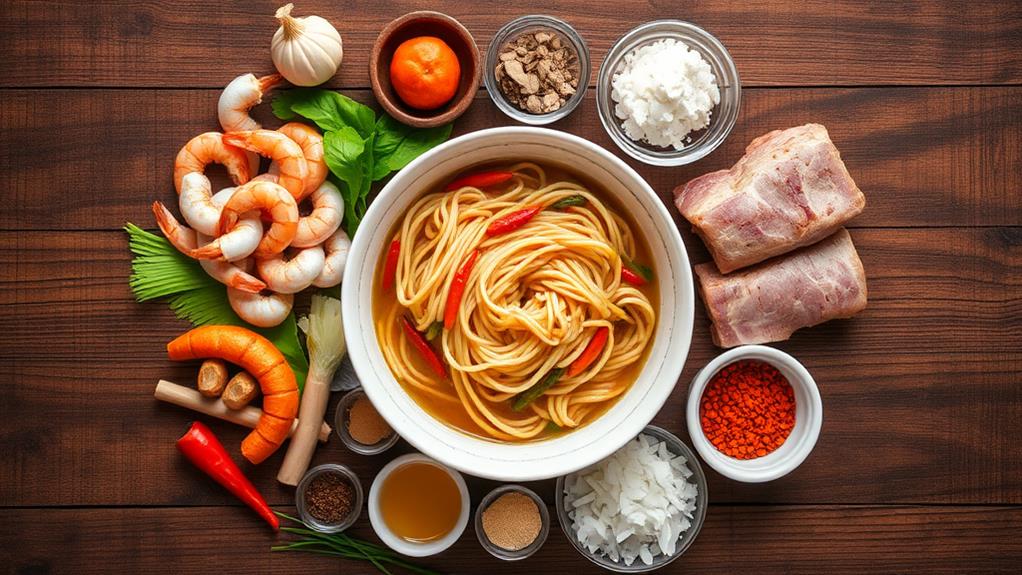
    pork shrimp vegetables noodles

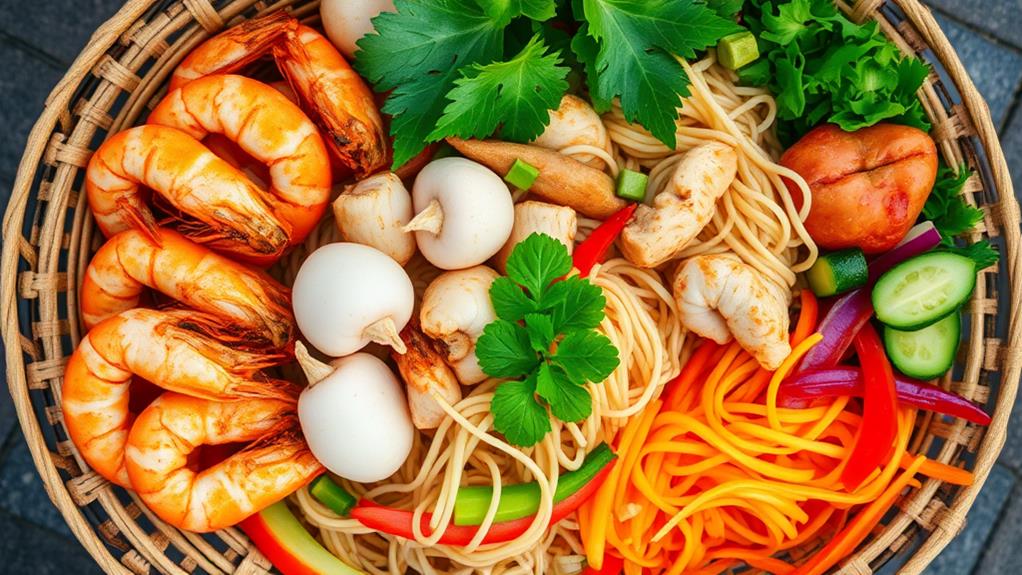
    Pancit recipes typically rely on a combination of staple ingredients to create their signature flavors and textures. These ingredients include various types of noodles, such as bihon (rice vermicelli) and canton (egg noodles), which serve as the base of many recipes.

    Vegetables are added to provide flavor, nutrients, and crunch. Common vegetables used in pancit recipes include carrots, cabbage, bell peppers, and snow peas.

    Meats are used to add heartiness and richness to the dish. Popular proteins used in pancit recipes include chicken, shrimp, pork, and beef.

    Seasonings are essential for flavoring and giving pancit its signature taste profile. Common seasonings used include soy sauce, oyster sauce, garlic, and calamansi juice.

    Additional toppings are used to add texture and visual appeal to the final dish. These toppings often include hard-boiled eggs, green onions, and chicharrón (crispy pork skin).

    Cooking Techniques for Pancit

    Mastering Cooking Techniques for Pancit

    Stir-Frying: Quick and Crispy

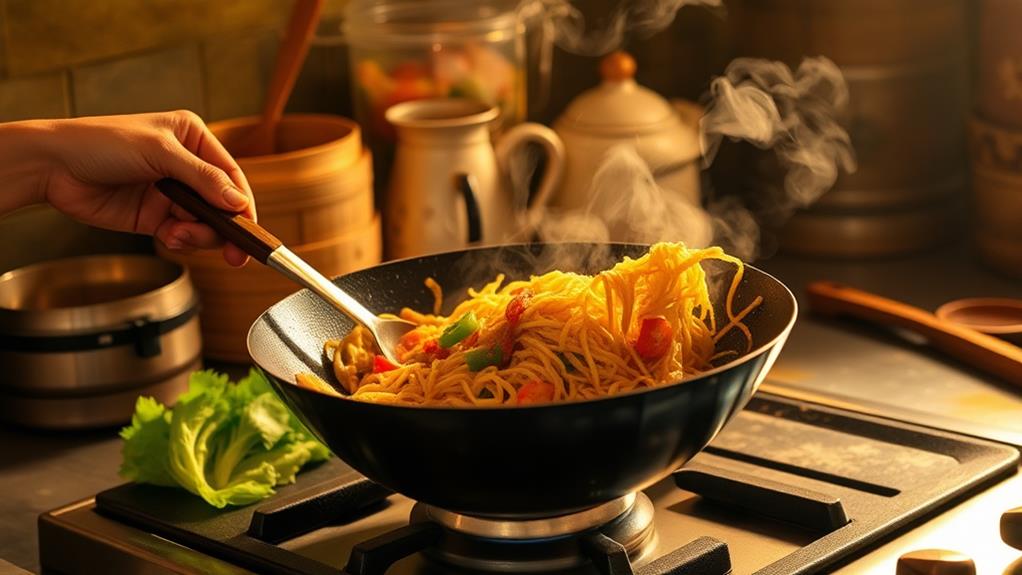
    Stir-frying is a cooking technique that rapidly sautés ingredients over high heat in a small amount of oil, enhancing flavors and textures. This method is perfect for pancit dishes that require a crispy texture and caramelized flavors.

    For example, stir-frying is ideal for Pancit Canton, where the noodles and vegetables are quickly cooked in a wok to achieve a crunchy texture and a savory flavor.

    Braising: Rich and Savory

    Braising is a slower cooking method that involves cooking ingredients in a flavorful broth, resulting in a rich and savory dish. This technique is ideal for noodle soups like Pancit Lomi, where the broth is the star of the show.

    To achieve the desired flavor and consistency, it's essential to carefully prepare the broth by simmering it for an extended period.

    Steaming: Moisture Retention

    Steaming is used for certain noodle variations to retain moisture and maintain the integrity of the noodles. This technique is particularly useful for delicate noodles like Pancit Miki, which can become mushy if overcooked.

    Presentation: Aesthetics and Flavor

    Presentation techniques like serving pancit on banana leaves not only add a local aesthetic but also subtly influence the cooking process by imparting additional flavors.

    The banana leaves infuse the noodles with a subtle, slightly sweet flavor that complements the dish.

    Cultural Significance of Pancit
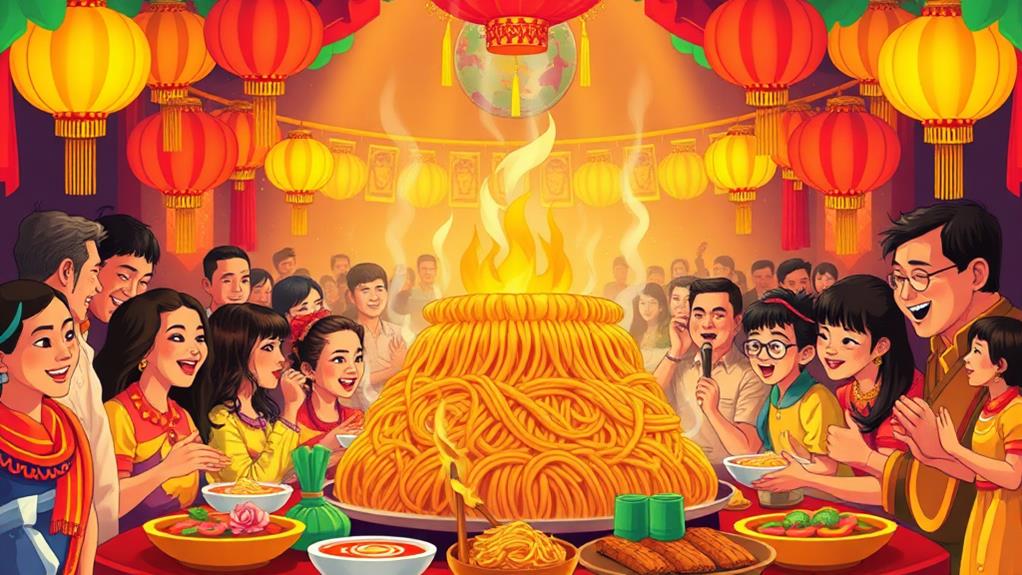
    pancit cultural heritage dish

    The cultural significance of pancit extends beyond its taste and texture, holding a profound importance in Filipino culture.

    Pancit symbolizes long life. In Filipino culture, pancit is traditionally served during birthdays and special celebrations, signifying good fortune and longevity. This tradition stems from the Chinese influence, where noodles represent a long and healthy life.

    Pancit represents culinary fusion. The dish combines Chinese and Filipino culinary traditions, showcasing the historical cultural exchange between the two nations. For instance, the use of stir-frying and noodles originated from Chinese cuisine, while the addition of vegetables and spices reflects Filipino flavors.

    Pancit fosters community bonding. In Filipino gatherings, pancit is often prepared in large quantities, encouraging communal sharing and social bonding. This tradition reinforces family ties and strengthens social connections.

    Pancit embodies cultural pride. The diverse variations of pancit dishes demonstrate the adaptability of Filipino cuisine, incorporating local ingredients and cooking styles into traditional noodle recipes. This creativity and resourcefulness are a source of cultural pride for Filipinos.

    Through pancit, the rich cultural heritage of the Filipino community is showcased, where food brings people together and tells a story of cultural exchange and adaptation.

    Unique Pancit Noodle Dishes

    The Philippines is home to a diverse array of pancit dishes, each with its own unique flavor profile and traditions.

    One such dish is Pancit Malabon, which features thick rice noodles and is characterized by its rich seafood toppings, typically including shrimp and squid, and often garnished with hard-boiled eggs and green onions.

    Another regional specialty is Pancit Habhab, originating from Quezon, which uses flat rice noodles served on banana leaves and is typically topped with sautéed vegetables and meat. This dish is notable for being eaten without utensils, adding to its rustic charm.

    Other unique pancit noodle dishes include Pancit Sotanghon, made from glass noodles derived from mung beans, and Pancit Chami, which utilizes egg noodles stir-fried with a mix of vegetables and meat, characterized by its thick, savory sauce with a hint of vinegar.

    Each of these dishes offers a distinct flavor profile that showcases the diversity of pancit in the Philippines.

    Pancit in Filipino Celebrations
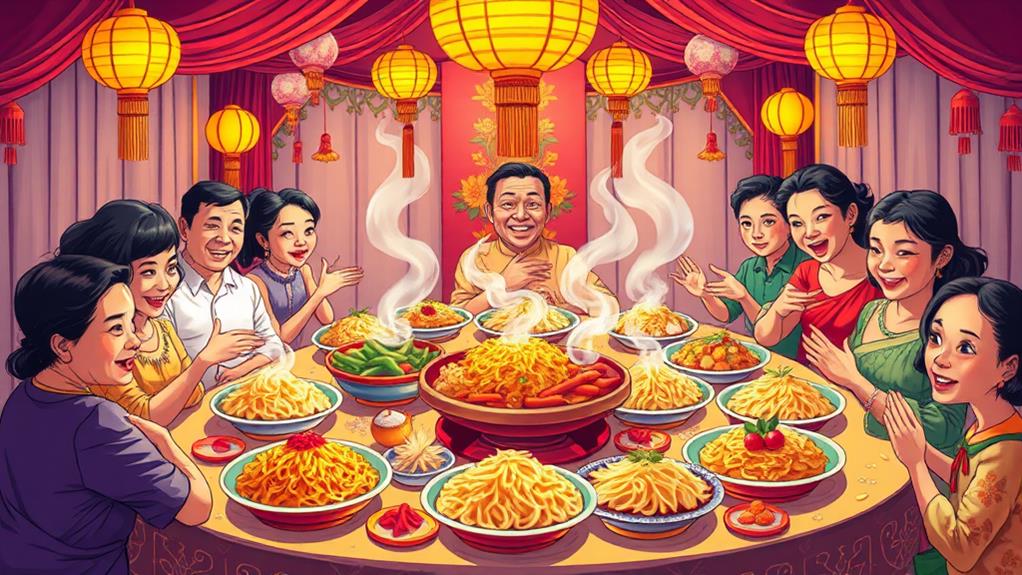
    pancit essential filipino tradition

    Pancit is an integral part of Filipino celebrations, symbolizing long life and good fortune.

    Communal sharing is reflected in the preparation of pancit, which is often made in large quantities to accommodate the Filipino culture of hospitality and togetherness during gatherings. This is evident in the way pancit is served in abundance, ensuring every guest has a share.

    Regional flavors are showcased through various types of pancit, such as Pancit Bihon and Pancit Canton, which are featured in festive meals. These different variations highlight the diversity of regional flavors and ingredients.

    At holidays and special occasions, pancit is typically accompanied by other dishes, emphasizing its role as a staple dish in Filipino cuisine. This is evident in the way pancit is consistently served alongside other traditional dishes during celebrations.

    The preparation of pancit often involves family tradition, with cherished recipes passed down through generations. This makes pancit a significant part of cultural heritage, as family members come together to prepare the dish using time-honored recipes.

    Are There Specific Types of Pancit That Are Traditionally Served for Special Occasions?

    Yes, there are specific types of pancit for special occasions in Filipino cuisine. Pancit Malabon and Pancit Palabok are commonly served during fiestas, birthdays, and other celebrations. These noodle dishes are often prepared with rich and flavorful seafood toppings, making them perfect for festive gatherings.

    Evolution of Pancit Recipes

    The Evolution of Pancit Recipes

    Incorporating Local Flavors and Techniques

    As Chinese traders and immigrants introduced their noodle dishes to the Philippines, pancit recipes began to take shape.

    Local ingredients and cooking techniques unique to the islands were gradually incorporated, resulting in over 20 distinct variations of pancit. Each region has its own spin, reflecting local flavors and preferences, such as the use of specific meats or vegetables.

    Regional Variations and Family Touches

    Traditional recipes have adapted through generations, often including personal family touches that differentiate local versions.

    For example, some regions use seafood, while others incorporate vegetables like pechay or bok choy. These variations showcase the dynamic nature of pancit, which remains a beloved staple in Filipino cuisine.

    Modern Influences and Fusion Dishes

    Modern variations of pancit are influenced by international culinary trends.

    Creative reinterpretations, like fusion dishes that blend traditional flavors with contemporary styles, are becoming increasingly popular.

    For instance, some modern recipes incorporate seasonal ingredients, responding to changing dietary trends while retaining cultural significance.

    Frequently Asked Questions

    What Are the Different Types of Pancit?

    Pancit is a diverse Filipino noodle dish with various regional variations.

    These regional pancit dishes differ in their ingredients and cooking techniques.

    Pancit Bihon, for instance, uses thin rice noodles, while Pancit Canton is made with egg noodles. Each variation offers a unique flavorful experience.

    Pancit Malabon features thick rice noodles topped with rich seafood sauce, whereas Pancit Habhab is served on banana leaves with flat rice noodles.

    What Is the Most Popular Pancit in the Philippines?

    Pancit Bihon is the most popular pancit in the Philippines.

    This stir-fried rice noodle dish has become an integral part of the country's culinary history.

    Regional variations of Pancit Bihon reflect the cultural significance of pancit in different areas.

    Its versatility and flavor have made it a staple in many Filipino households, suitable for both festive occasions and everyday meals.

    What Is the English Name for Pancit?

    Pancit is referred to as "noodles" in English. This name is fitting, given that pancit is a type of noodle dish. It originated from Chinese culinary traditions and got its name from the Hokkien words for "convenient food."

    Pancit is typically made with various ingredients such as rice flour or egg.

    It's often served at celebrations and gatherings, symbolizing longevity and good fortune.

    What Is the Difference Between Pancit Guisado and Pancit?

    The main difference between Pancit Guisado and Pancit lies in their ingredients, cooking methods, and regional variations.

    Pancit Guisado is a specific stir-fry dish that typically consists of a mix of leftover meats and vegetables. It is a distinct recipe with a set of ingredients and cooking methods.

    On the other hand, Pancit is a broader term that encompasses various noodle dishes. These dishes can have different ingredients, cooking methods, and flavor profiles depending on the region.

    For example, Pancit Lomi is a soup-based dish, while Pancit Malabon features a rich seafood sauce. The diversity of Pancit recipes is what makes them exciting to explore and discover.
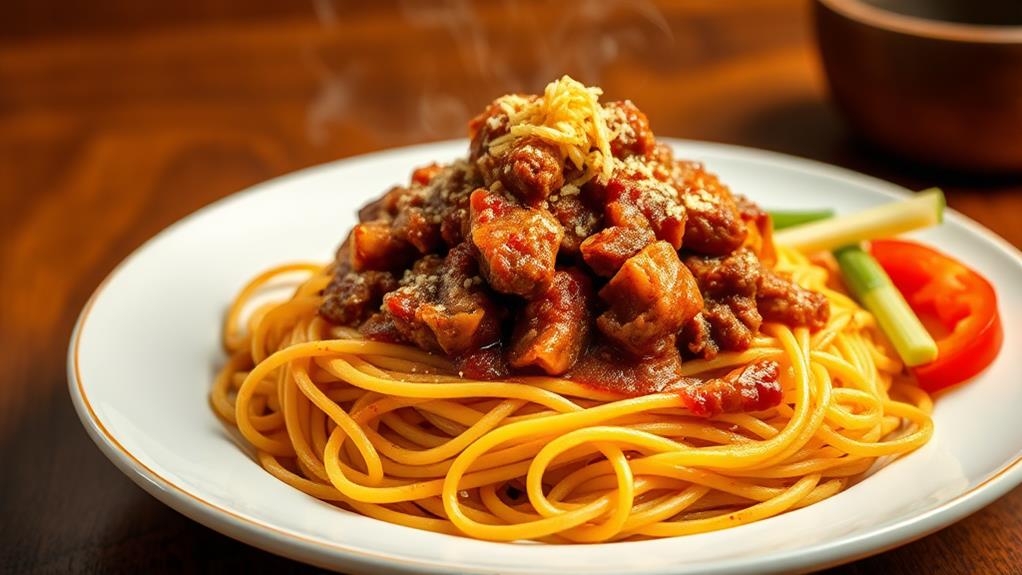
  • What Makes Spaghetti Pinoy Style Unique?

    What Makes Spaghetti Pinoy Style Unique?

    Pinoy-style spaghetti has a distinct flavor profile that sets it apart from traditional spaghetti.

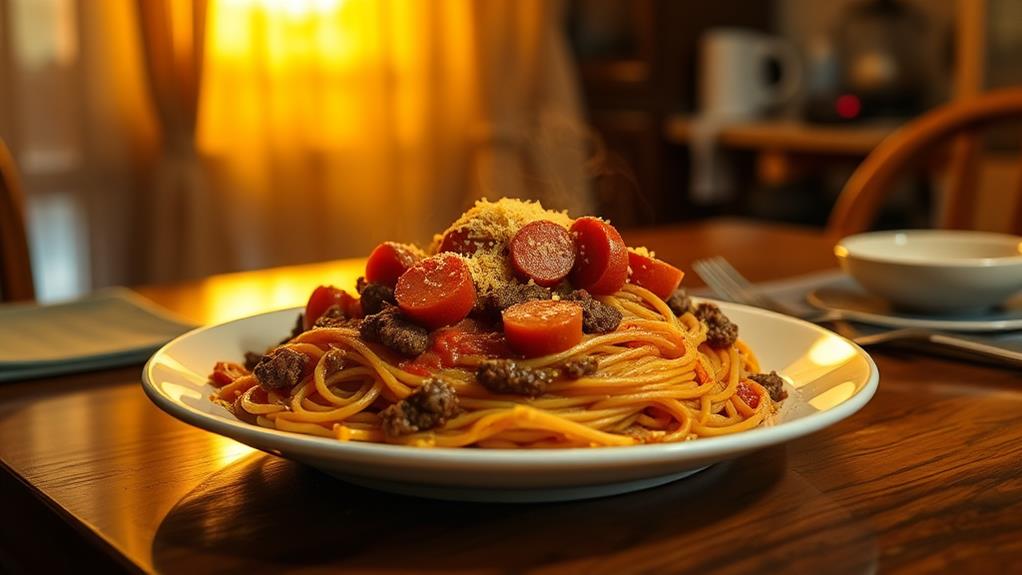
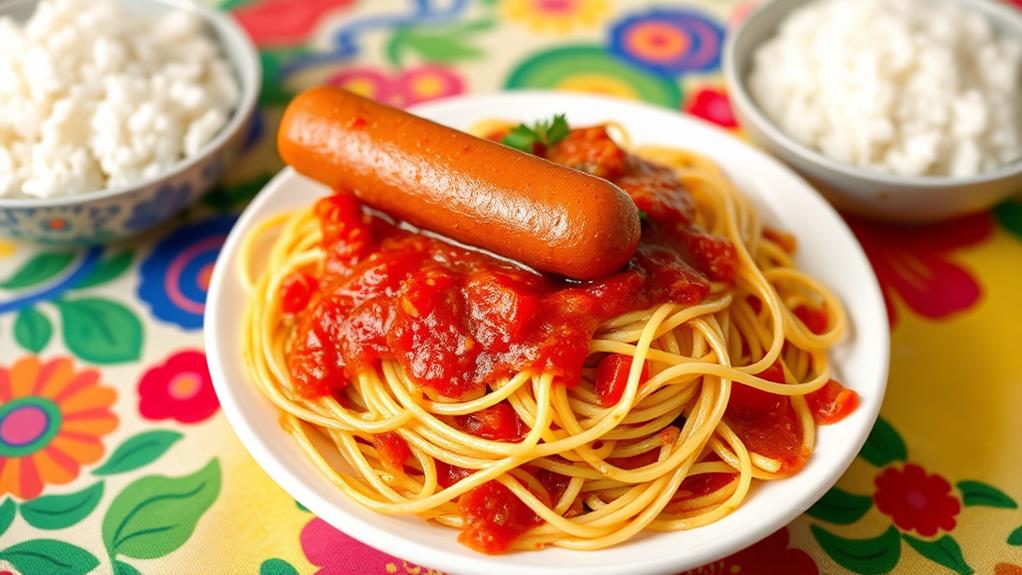
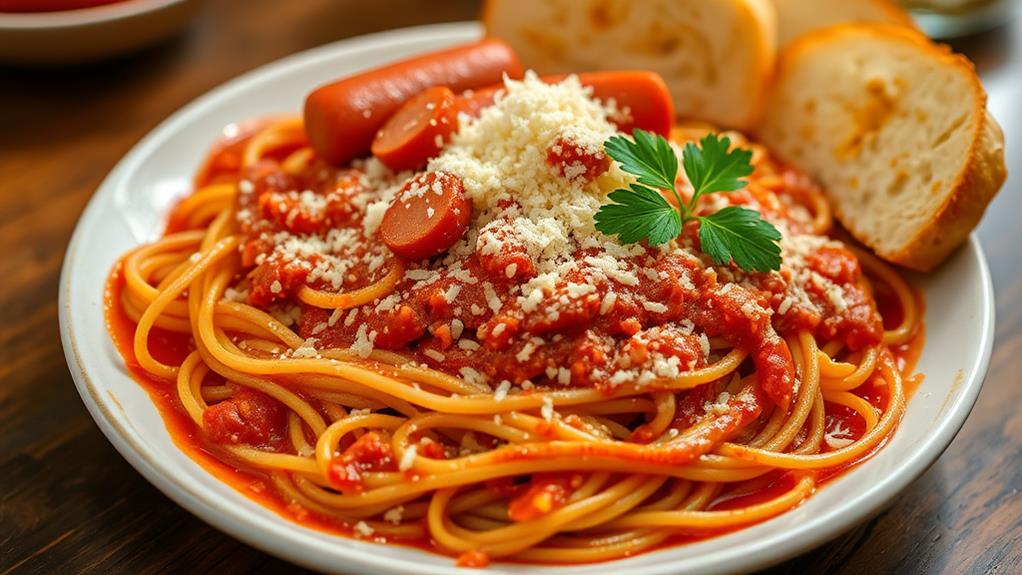
    This unique taste is attributed to the incorporation of sugar and banana ketchup in the sauce, which adds a sweet element to the dish. The savory aspect comes from the use of ground beef or pork and red hot dogs, creating a flavor combination unlike any other.
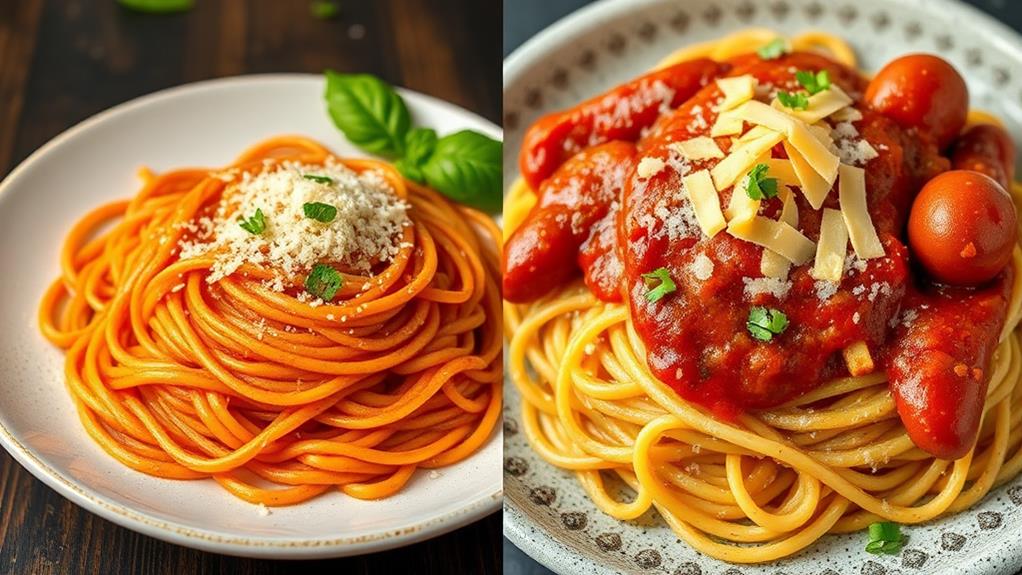
    The creamy sauce, made with evaporated milk, coats the tongue and provides a rich, thick texture that is often associated with childhood celebrations and family gatherings.

    The Filipino twist on this classic dish is a result of cultural influences and adaptations.

    In the Philippines, spaghetti is often served with a sweet-style sauce, which is a departure from the traditional Italian tomato sauce. This adaptation is a result of the country's cultural history, with influences from Spanish, American, and Asian cuisines.

    As a result, Pinoy-style spaghetti has become a beloved comfort food in the Philippines, with its own unique characteristics and flavor profile.

    Filipino Spaghetti's Sweet Twist

    sweet filipino spaghetti delight

    Filipino Spaghetti's Unique Flavor Profile

    Filipino spaghetti stands out from traditional Italian spaghetti due to its distinct sweetness. This sweetness comes from adding sugar and banana ketchup to the sauce, giving it a uniquely Filipino flavor profile.

    The sauce is a combination of sweet tomato sauce and evaporated milk, which adds creaminess and balances the acidity of the tomatoes. This creamy sauce is a key factor in Filipino spaghetti's appeal.

    Filipino spaghetti is a staple at birthday parties and family gatherings, particularly among kids. The addition of sweeter red hot dogs enhances the overall sweetness of the dish.

    A sprinkle of quick-melting cheese adds richness and a creamy texture, complementing the sweet sauce. This combination of flavors and textures makes Filipino spaghetti a comfort food that's hard to resist.

    Filipino spaghetti's unique flavor profile sets it apart from other versions of spaghetti. Its sweetness, creaminess, and rich texture have made it a beloved favorite in many Filipino households.

    Cultural Significance and Origins

    The cultural significance of Filipino spaghetti lies in its ability to evoke nostalgia and connection to heritage, transporting individuals back to childhood celebrations and family gatherings.

    American influence played a significant role in the origin of Filipino spaghetti, as hot dogs and ketchup were introduced to Filipino cuisine during the American colonization period. This introduction led to the creation of a unique fusion dish.

    Filipino spaghetti's sweet and sticky sauce, featuring banana ketchup, was developed during World War II due to tomato scarcity. This adaptation showcases the resourcefulness of Filipino cuisine.

    Filipino spaghetti represents a fusion of traditions, merging Italian influences with local flavors and ingredients. This blending of culinary traditions illustrates the evolution of Filipino cuisine.

    For instance, the use of banana ketchup and sweet-style sauce reflects the Filipino preference for sweet flavors.

    This iconic dish has become an integral part of Filipino celebrations, and its vibrant color and sweetness are culturally associated with deliciousness.

    As a comfort food, Filipino spaghetti evokes nostalgia and connection to heritage.

    Unique Ingredients and Flavors

    distinctive tastes and components

    Filipino spaghetti's unique flavor profile is shaped by the country's cultural diversity. This is evident in the use of banana ketchup, a staple in Filipino cuisine, which adds a sweet and fruity twist to the traditional tomato sauce.

    The inclusion of red hot dogs, a common ingredient in Filipino food, adds a vibrant red color and a distinct flavor that sets it apart from its Italian counterpart.

    The sauce is a masterful blend of ingredients, resulting in a sweet, tangy, and savory flavor profile. This is achieved by combining ground pork, sweet tomato, and sugar.
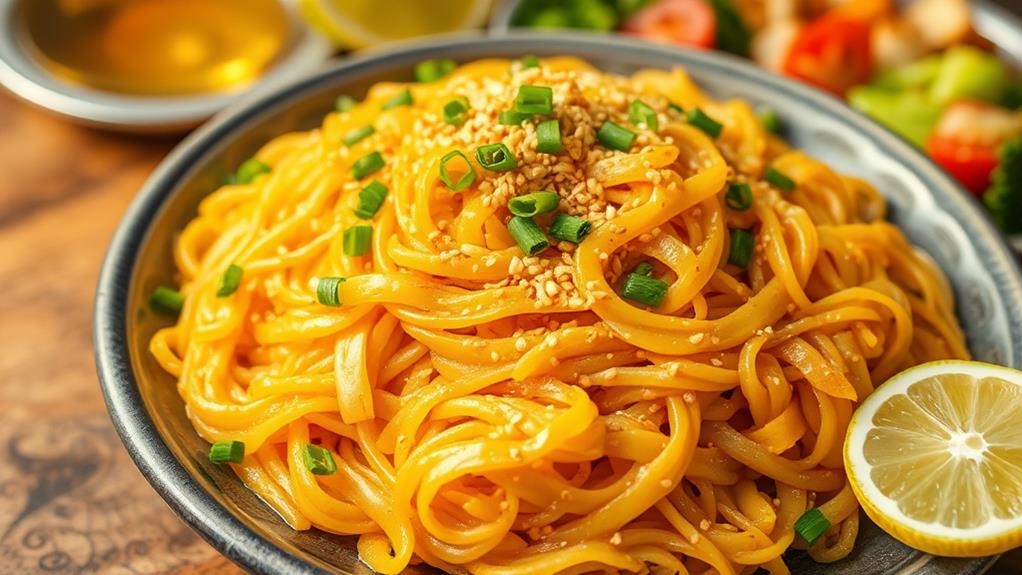
    The use of quick-melting cheese, such as Velveeta or local brands, adds a creamy texture and richness to the dish. Overall, Filipino spaghetti is a reflection of the country's ability to fuse local tastes with foreign influences.
    Cooking Techniques and Tips

    Crafting the Perfect Pinoy-Style Spaghetti

    To achieve a mouthwatering Pinoy-style spaghetti, mastering essential cooking techniques and tips is crucial. This beloved dish requires more than just combining ingredients; it demands a thoughtful approach to bring out its full flavor potential.

    Building a Flavorful Base

    To start, sauté onions and garlic in oil to create a rich foundation for the dish. This step is crucial in developing the overall flavor profile.

    Then, add ground meat and other ingredients to the pan, ensuring they're properly browned and cooked through.

    Simmering the Sauce

    Simmering the sauce for at least 30 minutes is vital to allow the flavors to meld together, resulting in a rich and thick sauce that complements the spaghetti.

    This step ensures the sauce is neither too watery nor too overpowering.

    Elevating the Dish

    To take your Pinoy-style spaghetti to the next level, follow these three crucial tips:

    Balance the Acidity: Add evaporated milk towards the end of cooking to balance the acidity of the tomato sauce and enhance creaminess.

    Sweeten to Taste: Add sugar to the sauce to adjust to personal taste preferences, as Filipino spaghetti is distinctly sweeter than its Italian counterpart.

    Get the Texture Right: Avoid rinsing the cooked spaghetti, and consider reserving some pasta water to adjust sauce consistency if it becomes too thick.

    Nostalgic Value and Memories

    cherished reminiscences and sentimentality

    Filipino Spaghetti: A Nostalgic Comfort Food

    Filipino Spaghetti evokes memories of childhood celebrations and family gatherings. This dish is more than just a meal; it's a nostalgic comfort food that transports you back to a time when life was simpler and birthday parties were the highlight of your year.

    The vibrant red color of the sweet sauce instantly brings back images of joyful Filipino gatherings. These gatherings were filled with laughter and love, where family and friends came together to celebrate special occasions.

    The addition of hot dogs, a unique twist to the classic spaghetti, sparks conversations about childhood memories and cherished dining experiences.

    Filipino Spaghetti is a staple in many Filipino households, reminding you of the importance of family celebrations and cultural traditions. It's often served alongside other classic Filipino dishes, such as fried chicken and cake, at birthday parties and special events.

    The dish holds a special place in many hearts, symbolizing the simplicity and joy of childhood.

    Adaptation and Evolution

    Filipino Spaghetti's uniqueness stems from creative adaptations that shaped its evolution. This beloved dish wasn't always a staple in Filipino cuisine, having evolved from traditional Italian recipes by incorporating local ingredients.

    The Filipino palate prefers sweeter sauces. To cater to this taste preference, sugar was introduced in the cooking process, setting Filipino spaghetti apart from its Italian counterpart. This adaptation reflected the local palate's distinct characteristic.

    Local ingredients became staples. The addition of hot dogs and banana ketchup, particularly during American colonization in the late 1800s, became integral to Filipino cuisine. These ingredients were incorporated into the spaghetti dish to suit local tastes.

    Fast-food chains further popularized Filipino spaghetti. The rise of fast-food chains like Jollibee, which introduced its own version, Jolly Spaghetti, contributed to the dish's widespread popularity and cultural significance in the country.

    This fusion of flavors not only made Filipino spaghetti unique but also cemented its cultural importance.

    Key Ingredients and Variations

    essential components and alternatives

    What sets Spaghetti Pinoy Style apart is its unique combination of ingredients and variations.

    Spaghetti Pinoy Style is a dish that explodes with flavor, thanks to its key ingredients. The sweetness of banana ketchup, a unique ingredient developed during World War II, is balanced by the savory flavor of Filipino-style red hot dogs. The evaporated milk adds a rich and creamy texture to the sauce, balancing out the acidity.

    Three key ingredients make this dish special:

    Ingredient Description
    Banana Ketchup Adds sweetness and tanginess to the sauce
    Filipino-style Red Hot Dogs Contributes a distinct flavor and vibrant color
    Evaporated Milk Balances acidity and enhances creaminess

    Some recipes may vary by using ground pork or beef as the protein base, while others incorporate luncheon meat or Spam for added depth of flavor. Additionally, quick-melting cheese, like Velveeta, is typically used as a topping, providing a creamy finish that complements the sweet sauce. These ingredients come together to create a rich and comforting flavor profile that's uniquely Filipino.

    Flavor Profile and Texture

    The flavors in Spaghetti Pinoy Style meld together in harmony, creating a truly unique flavor profile that's both familiar and excitingly different.

    The sweetness of the dish is amplified by the addition of banana ketchup, which adds a tangy richness. The thick, sticky sauce coats the noodles perfectly, thanks to the simmered meat mixture with tomato sauce and sugar.

    Three key elements contribute to the dish's flavor profile and texture:

    Sweet and savory contrast is achieved by combining ground beef or pork with red hot dogs, which introduces a savory depth and balances the sweetness of the sauce, creating a mix of sweet, salty, and meaty flavors.

    The creamy and comforting aspect comes from quick-melting cheese, which adds a fatty flavor, and evaporated milk, which creates a smooth and comforting mouthfeel, balancing the acidity of the sauce.

    The dish's hearty and indulgent quality is due to the thick sauce and rich flavors, making each bite feel indulgent and satisfying, making Spaghetti Pinoy Style a comforting and filling meal.

    Serving Suggestions and Pairings

    ideal food pairings guide

    Elevate the Filipino Spaghetti Experience with Traditional Pairings

    To fully appreciate the unique flavor profile of Filipino spaghetti, serve it with complementary dishes that balance its sweet and tangy sauce.

    Pairing it with fried chicken creates a well-rounded meal, perfect for parties and family gatherings. For added satisfaction, serve it with garlic bread and a refreshing green salad to cut the richness of the sauce.

    Add a Creamy Touch with Shredded Quick Melt Cheese

    Top the spaghetti with shredded quick melt cheese, which adds a creamy and indulgent layer to the dish. This combination is often served at celebratory meals, making it a staple at birthday parties alongside traditional birthday cakes.

    Offer Additional Flavor Options

    Provide a side of sweet and sour sauce or banana ketchup to offer an extra layer of flavor, reflecting the unique taste profile of Filipino cuisine.

    Can I Make Spaghetti Pinoy Style Without the Secret Ingredient?

    Yes, you can definitely make spaghetti Pinoy style without the secret ingredient. The key to perfecting spaghetti pinoy style is to use local Filipino flavors such as banana ketchup, hotdogs, and ground meat. These will give your spaghetti that unique and delicious Filipino twist that everyone will love.

    Global Popularity and Reception

    Filipino spaghetti's unique flavor profile has captured the hearts and taste buds of people worldwide. Its distinct sweet flavor and cultural significance have gained international recognition.

    Cultural connection is a key factor in its global popularity. For Filipinos living abroad, a plate of spaghetti Pinoy style is a comforting reminder of their cultural heritage and childhood memories.

    Filipino spaghetti has been successfully adapted into local cuisine in countries like Australia, showcasing its global interest and unique twist on traditional pasta dishes.

    Social media has played a significant role in spreading the popularity of Filipino spaghetti. Social media platforms have facilitated the sharing of recipes, creating a community of enthusiasts eager to explore and recreate this beloved dish outside the Philippines.

    The combination of sweet sauce and hot dogs often surprises and delights non-Filipino diners, sparking discussions about cultural fusion and the evolution of culinary traditions.

    Filipino spaghetti is more than just a dish – it's a symbol of cultural heritage and global interest.

    Frequently Asked Questions

    How Is Filipino Spaghetti Different?

    Filipino spaghetti is distinct from its international counterparts due to its unique blend of regional variations, ingredient choices, and cooking techniques shaped by cultural influences.

    It is sweeter due to the addition of sugar and banana ketchup, a popular condiment in the Philippines. This sweetness is a hallmark of Filipino spaghetti and sets it apart from other versions.

    Meat is often added, typically in the form of hot dogs or sausages, which are common ingredients in Filipino cuisine. This adds a savory element to the dish.

    Filipino spaghetti is a staple at festive occasions and family gatherings, catering to local taste preferences.

    Its unique flavor profile has become an integral part of Filipino celebrations and social gatherings.

    Why Is Filipino Spaghetti Sauce Sweet?

    Filipino spaghetti sauce is sweet because it's deliberately made with sweet ingredients. These ingredients, such as sugar, banana ketchup, and condensed milk, cater to the Filipino taste preference for vibrant flavors.

    This cultural preference is influenced by the country's history and cuisine, which combines different flavors and ingredients.

    Regional variations and family traditions also play a role in the sweetness of Filipino spaghetti sauce. For example, some popular toppings like grated cheese and hot dogs add to the sweetness.

    These toppings are commonly used in Filipino spaghetti dishes, especially during festive occasions.

    What Is Filipino Style Spaghetti and Why Is It Named One of the Worst Dishes in the World?

    Filipino-style spaghetti is a unique pasta dish shaped by cultural influences from American colonization.

    This sweet and savory dish is a product of Filipino history.

    The country's colonial past led to the adoption of American food habits, including sweet-style pasta sauces.

    Regional variations and ingredient substitutions, such as using banana ketchup and hot dogs, set it apart from traditional Italian recipes.

    Despite being considered one of the worst dishes in the world, Filipino-style spaghetti is a beloved comfort food for Filipinos.

    It brings joy to family gatherings and festive occasions.

    Why Is Pasta Famous in the Philippines?

    Pasta's popularity in the Philippines stems from cultural influences that shaped the country's culinary history.

    When the Americans colonized the Philippines, they introduced pasta to the Filipino diet. The Filipinos adapted pasta to their taste, which led to unique variations that became regional specialties.

    For instance, some pasta dishes use banana ketchup, a sweet and tangy condiment that's a staple in Filipino cuisine.

    Pasta has become a staple at Filipino gatherings due to its adaptability to local tastes.

    Creative ingredient substitutions have fueled pasta's popularity in the Philippines. For example, some recipes use patis (fish sauce) or bagoong (fermented fish paste) to add flavor to pasta dishes.

    This blend of foreign and local flavors has resulted in a unique fusion cuisine that Filipinos have grown to love.

  • What Ingredients Do You Need for Palabok Noodles?

    What Ingredients Do You Need for Palabok Noodles?

    Palabok Noodles Ingredients

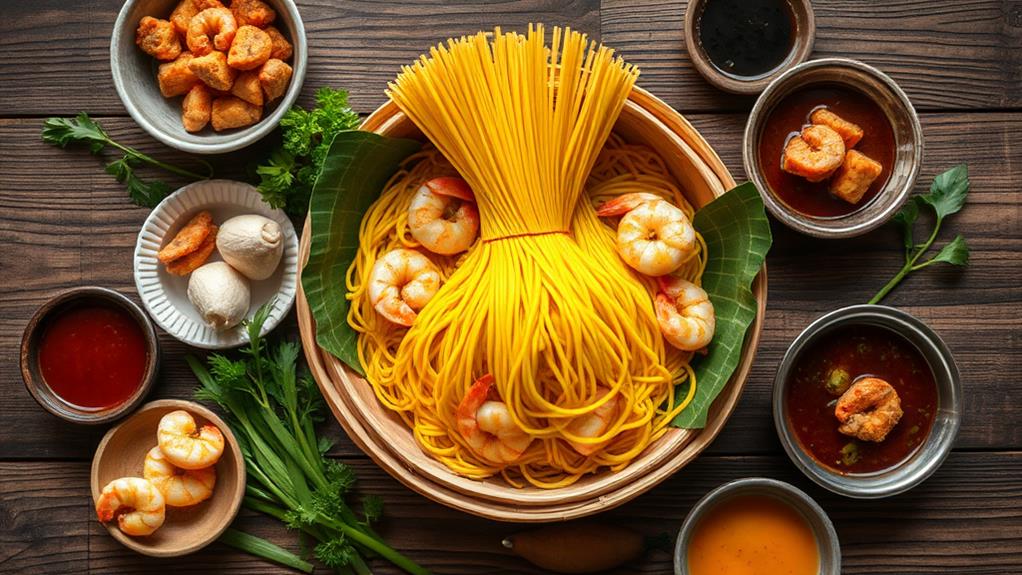
    Base Ingredients: To make Palabok noodles, you need bihon noodles, annatto powder, ground pork, and shrimp. These ingredients form the foundation of the dish.

    Flavorful Components: To add texture and flavor, include crushed chicharrón for crunch and hard-boiled egg slices for creaminess.

    Palabok Sauce Ingredients: To prepare the signature Palabok sauce, you'll need shrimp stock, sautéed ground pork, garlic, onion, and fish sauce.

    Traditional Toppings: Consider adding cooked shrimp, smoked fish, and chopped green onions to elevate your Palabok noodles.

    Understanding Pancit Palabok

    delicious filipino noodle dish

    Pancit Palabok: A Culinary Representation of Filipino Culture

    When you take a bite of Pancit Palabok, you're experiencing a culinary representation of Filipino culture. This traditional noodle dish is characterized by its rich shrimp and pork sauce, served over thin rice noodles known as bihon.

    The key ingredients in Pancit Palabok come together to create a dish that's both hearty and flavorful. Annatto powder adds color, ground pork provides depth, and shrimp adds protein. The sauce is prepared using shrimp stock and pork broth, with a cornstarch slurry to achieve the desired thickness, and is simmered to develop a deep flavor.

    Toppings add texture and variety to the dish. Hard-boiled eggs, crushed chicharrón, and smoked fish are common toppings.

    With approximately 564 kcal per serving, Pancit Palabok is a nutrient-dense meal that's perfect for celebrations and family gatherings. It's a symbol of hospitality and a reflection of the diverse culinary influences present in Filipino cuisine.

    Essential Ingredients for Palabok

    Pancit Palabok's Essential Ingredients

    The foundation of Pancit Palabok is built on bihon noodles, thin rice noodles that provide the base for the dish.

    To give Palabok its signature bright orange color and flavor, annatto powder or annatto water is necessary.

    Minced pork and shrimp are key components that add protein and depth to the sauce, combining to create a rich and savory flavor profile.

    Some essential toppings to consider are:

    Crushed chicharrón (crispy pork rind) for added crunch.

    Hard-boiled egg slices for creaminess.

    Tinapa flakes for a salty, smoky flavor.

    These ingredients will help you create an authentic and delicious Pancit Palabok.

    The Palabok Sauce Components

    palabok sauce ingredients list

    The Palabok sauce is rich and savory due to the combination of its key components.

    The first component is a shrimp stock, which is made by boiling shrimp shells and heads to extract their flavorful essence. This stock provides a foundation of seafood flavor to the sauce.

    Next, ground pork is sautéed with garlic and onion, adding depth and richness to the sauce.

    The addition of annatto powder or annatto water gives the Palabok sauce its distinctive bright yellow-orange color.

    A splash of fish sauce (patis) is also essential, as it provides a unique umami flavor that elevates the dish.

    Finally, the sauce is thickened with a cornstarch slurry, enhancing its texture before pouring it over the noodles.

    By balancing these ingredients, a harmonious blend of savory, sweet, and umami flavors is achieved, making the Palabok noodles truly unforgettable.

    Traditional Toppings and Garnishes

    Traditional Toppings and Garnishes Elevate Pancit Palabok

    To create a well-rounded and delicious Pancit Palabok dish, it's essential to adorn it with traditional toppings and garnishes that complement the rich, savory sauce.

    These toppings add flavor, texture, and visual appeal to the dish.

    Must-Have Toppings:

    • Cooked shrimp, which adds protein and flavor
    • Smoked fish, providing a salty and savory element
    • Crumbled chicharrón, which adds a satisfying crunch and umami flavor

    Balancing Flavors and Textures:

    These toppings work together harmoniously, with the smokiness of the fish and the richness of the chicharrón balanced by the freshness of chopped green onions as a final garnish.

    Hard-boiled eggs, sliced and arranged on top, contribute a creamy element and additional protein, making the dish more substantial.

    Cooking Tips and Variations

    culinary techniques and adaptations

    Mastering the Cooking Process

    To achieve perfect noodles, soak them in water for at least 30 minutes before cooking to ensure they soften properly and maintain a firm texture when boiled.

    Cook them for about 10-15 minutes until they're soft, but be careful not to overcook them to avoid mushiness.

    Elevating the Flavor

    Use fresh shrimp for the sauce to elevate the flavor of your dish.

    Cook shrimp heads in the broth to release natural juices. This will add depth to your Palabok sauce.

    Healthier Alternatives

    Consider using kelp or shirataki noodles, which are lower in calories and carbohydrates, as a healthier alternative to traditional noodles.

    Customizing with Toppings

    Experiment with various toppings to customize your Pancit Palabok according to your personal preferences.

    Some options include fried tofu, squid rings, or additional vegetables.

    Nutritional Information and Facts

    Pancit Palabok provides approximately 405 calories per serving, making it a suitable option for energy-packed gatherings.

    This dish is a good source of carbohydrates, with 46 grams per serving, which is ideal for active individuals. You'll also get 23 grams of protein primarily from shrimp and pork, supporting muscle health and repair.

    The dish contains 15 grams of fat per serving, offering a moderate amount of dietary fat for nutrient absorption.

    The sodium content per serving is 1793 mg, which is about 75% of the daily value, suggesting moderation for those monitoring salt intake.

    Customizing Your Palabok Experience

    personalizing palabok dish preparation

    Customizing Your Palabok Experience

    To create a unique Palabok dish, make deliberate choices from various customization options. This allows you to tailor the dish to your taste preferences.

    Noodle Options

    Choose between traditional bihon noodles and cornstarch sticks for a different texture and taste.

    Flavor Enhancement

    Add Knorr Shrimp Cube or tinapa flakes to deepen the flavor of your Palabok.

    Protein Sources

    Incorporate boiled pork, shrimp, or fried tofu to add protein to your meal.

    Garnish Options

    Experiment with crushed chicharrón and chopped scallions for a crunchy texture and fresh flavor.

    Sauce Consistency

    Adjust the amount of flour mixed with water to achieve your desired sauce thickness.

    When customizing your Palabok, mix and match these options to create a unique flavor profile. This allows you to enjoy a dish tailored to your taste buds.

    How Can I Use Different Ingredients to Make Palabok Noodles?

    Palabok noodles can be made with various ingredients to create different variations of palabok noodles. You can use a combination of rice noodles, shrimp, crushed pork rinds, hard-boiled eggs, and a savory sauce made of stock, fish sauce, and annatto powder. Customize it to your taste with various toppings and flavors.

    Exploring Pancit Variations

    Pancit Variations

    Five Distinct Types of Pancit

    There are five popular variations of Pancit dishes, each with unique characteristics that set them apart from one another.

    These variations differ in their ingredients, cooking methods, and regional influences, showcasing the diversity and adaptability of Filipino cuisine.

    Pancit Malabon

    Thick, Tubular Rice Noodles with Seafood Toppings

    Pancit Malabon features thick, tubular rice noodles and seafood toppings, combining flavors and textures.

    This variation is known for its richness and savory flavors.

    Pancit Palabok

    Thin Bihon Noodles with Vegetables

    Pancit Palabok features thin bihon noodles and a medley of vegetables, representing a classic Filipino comfort food.

    Its simplicity and familiar flavors make it a staple in many Filipino households.

    Vegetarian Pancit Bihon

    Rice Noodles with Vegetables

    Vegetarian Pancit Bihon incorporates rice noodles with an assortment of vegetables, providing a plant-based option that's both healthy and delicious.

    This variation caters to those with dietary restrictions or preferences.

    Regional Influences and Cultural Heritage

    Each type of pancit reflects local ingredients and cooking techniques, making every dish a unique representation of its cultural heritage.

    Regional variations and interchangeable names add to the diversity of pancit dishes, showcasing the creativity and adaptability of Filipino cuisine.

    Frequently Asked Questions

    What Are Palabok Noodles Made Of?

    Palabok noodles are made from cornstarch, which gives them a distinct texture. This unique composition affects their cooking techniques, requiring a 30-minute soak before boiling.

    This is different from other rice noodles, which don't need to be soaked for such a long time.

    In traditional recipes like Pancit Palabok, palabok noodles are essential because they absorb flavors from the rich shrimp and pork sauce.

    Understanding the ingredients of palabok noodles helps unlock their cultural significance and health benefits as a regional variation.

    What Is Palabok Mix Made Of?

    A typical Palabok mix consists of a blend of ingredients that reflect the dish's rich history and cultural traditions.

    This mix usually includes annatto powder for color, which gives the noodles their distinctive yellow hue.

    Pork broth or shrimp stock are added for flavor, providing a rich and savory taste.

    Cornstarch or flour are used as thickening agents, helping to achieve the desired consistency.

    Additionally, dehydrated shrimp, garlic and onion powder, and fish sauce may be included to enhance the overall flavor of the dish.

    This mix serves as the foundation for various Palabok recipes and serving styles, making it a staple in many Filipino occasions and gatherings.

    What Are the Ingredients in Super Q Palabok?

    Super Q Palabok ingredients include water, cornstarch, and stabilizers.

    These ingredients make Super Q Palabok gluten-free and suitable for individuals with dietary restrictions.

    What Is Pancit Malabon Sauce Made Of?

    Pancit Malabon sauce is a savory condiment originating from the coastal town of Malabon.

    It's typically made with a combination of shrimp stock and pork broth, which gives it a rich, meaty flavor.

    Ground pork is also a common ingredient, adding depth to the sauce.

    Some variations of the sauce may include seafood such as shrimp, squid, and mussels, which further enhance the flavor.

    Annatto powder is responsible for the sauce's signature orange color.

  • Essential Ingredients for Authentic Pancit Canton

    Essential Ingredients for Authentic Pancit Canton

    Authentic Filipino Pancit Canton requires specific ingredients to achieve its characteristic flavor, texture, and aroma.

    To start, you'll need semi-dry egg noodles, which provide the foundation of the dish.

    For protein, traditional options like pork and shrimp are essential.

    A colorful medley of vegetables is also necessary, including carrots, cabbage, and snow peas.

    To bring all the ingredients together, a precise balance of savory sauces and seasonings is crucial.

    Soy sauce, oyster sauce, and fish sauce are the key players in achieving the desired flavor profile.

    Finally, a squeeze of calamansi or lime juice adds a tangy finish to the dish.

    With these essential ingredients in place, you'll be able to create a truly traditional and mouthwatering Pancit Canton.

    Understanding Pancit Canton Basics

    pancit canton cooking guide

    Pancit Canton: A Traditional Filipino Noodle Dish

    Pancit Canton is a staple in Filipino cuisine, made with wheat-flour egg noodles stir-fried with a mix of proteins and vegetables. The choice of protein varies, but shrimp, chicken, or pork are common additions, depending on personal preferences or availability.

    The vegetables, such as carrots, cabbage, bell peppers, and snow peas, add flavor and texture to the dish. These ingredients are typically stir-fried together to create a harmonious blend of flavors and textures.

    The Savory Flavor Profile

    The rich, umami taste of Pancit Canton is achieved through the use of soy sauce and oyster sauce. These two ingredients work together to create a deep, savory flavor that complements the noodles and proteins.

    A squeeze of calamansi or lime juice adds a tangy note, balancing out the flavors and completing the dish.

    Essential Ingredients for Authenticity

    Key Ingredients for Authentic Pancit Canton

    Noodles: Semi-dry egg noodles are essential for achieving the chewy texture characteristic of Filipino cuisine.

    Vegetables: A colorful mix of vegetables, including carrots, cabbage, bell peppers, and snow peas, add crunch and freshness to the dish.

    Proteins: Shrimp, pork (often in the form of Chinese sausage), or chicken provide distinct flavors and richness to the table.

    Sauces: Soy sauce and oyster sauce are necessary for achieving the umami flavor profile that defines authentic Pancit Canton.

    Finishing Touch: A squeeze of calamansi juice (or its substitutes like lime juice) before serving enhances the dish's flavor with a tangy finish.

    Selecting the Right Noodles

    choosing appropriate pasta varieties

    Selecting the Right Noodles for Pancit Canton

    Opt for Semi-Dry Egg Noodles

    To achieve an authentic and delicious Pancit Canton, choose semi-dry egg noodles, which provide the characteristic chewy texture of this Filipino staple. These noodles can be found in Asian grocery stores and don't require soaking prior to cooking.

    Choose Philippine Brand Noodles

    When shopping, look for Philippine brand noodles, such as UFC, which are favored for their texture and ability to hold up during cooking. This ensures an authentic experience and helps achieve the perfect stir-fry.

    Cook Noodles Until Al Dente

    Boil the noodles until al dente before adding them to the stir-fry. This helps them absorb the flavors of the sauce without becoming mushy.

    Choosing Proteins for Flavor

    Adding Flavor with Proteins

    Traditional Options

    Pork, chicken, and shrimp are staple proteins in Pancit Canton because they add a rich, meaty flavor to the dish. These options provide a classic taste that many people associate with this Filipino noodle dish.

    Alternative Proteins

    Chinese sausage (longganisa) adds a sweet and savory contrast to Pancit Canton. If you prefer seafood, shrimp and squid will give your dish a briny, umami flavor.

    Enhancing Flavor with Marinades

    Marinating chicken or pork in soy sauce before cooking intensifies the flavor and keeps the meat tender. This step is essential to bring out the full flavor of the proteins.

    Vegetarian Options

    For vegetarians, tofu or Shiitake mushrooms provide a hearty, flavorful alternative that still captures the essence of Pancit Canton. These options ensure that everyone can enjoy this delicious Filipino dish.

    Vegetable Options for Texture

    textured vegetable choices available

    Vegetable Options for Texture

    Essential Vegetables

    Incorporating a variety of vegetables is crucial to achieve a delightful harmony of textures and flavors in Pancit Canton.

    Carrots, cabbage, and bell peppers provide a balance of sweetness, crunch, and color to the dish, setting the foundation for a satisfying meal.

    Adding Crunch and Freshness

    To add crispness to your Pancit Canton, snow peas or snap peas are excellent options, contributing a refreshing texture and vibrant green color.

    Celery is another great addition, offering a crunchy texture and subtle aromatic flavor that complements the other ingredients.

    Unique Twists

    For a distinct texture and flavor profile, napa cabbage can be used instead of regular cabbage.

    Long green beans can also be included for additional crunch and chewiness, making the dish more satisfying and diverse in texture.

    Seasonings and Sauces

    Seasonings and Sauces: The Key to Authentic Pancit Canton Flavor

    The secret to creating an authentic Pancit Canton dish lies in its expertly balanced seasonings and sauces.

    These flavor enhancers elevate the dish from a simple stir-fry to a culinary masterpiece. To achieve this, you need to combine the right seasonings and sauces to create a well-rounded flavor profile characteristic of Filipino cuisine.

    Essential Seasonings and Sauces

    Soy sauce and oyster sauce provide a savory umami flavor, while fish sauce and black pepper add depth to the dish.

    Sugar balances the savory notes, and calamansi juice (or lime) adds a refreshing citrusy tang. By combining these seasonings, you can create a harmonious flavor profile.

    Cooking Techniques and Tips

    culinary skills and advice

    Mastering the Art of Cooking Pancit Canton

    To create an authentic Pancit Canton dish, start by blanching vegetables for 35-50 seconds to preserve their vibrant color and crisp texture. This step is crucial in maintaining the freshness of the vegetables.

    Building a Strong Flavor Base

    Sauté garlic and onions until they're fragrant and translucent to create a robust flavor foundation for your protein. This step allows the flavors to meld together and intensify.

    Cooking Noodles to Perfection

    Boil water and cook noodles until al dente, ensuring they absorb the flavors of the sauce without becoming mushy. This texture is essential in achieving a well-balanced dish.

    Adding Vegetables with Precision

    Cook vegetables in stages, just until crisp-tender, as they'll continue to cook off-heat after being mixed with the noodles. This technique prevents overcooking and maintains the vegetables' texture.

    Balancing Flavors with Sauces

    Gradually add sauces like soy sauce and oyster sauce while stir-frying, mixing thoroughly to ensure an even distribution throughout the dish. This step allows the flavors to meld together harmoniously.

    Customizing for Dietary Needs

    Customizing Pancit Canton for Dietary Needs

    Vegetarian Options

    To make Pancit Canton suitable for vegetarians, replace meat with tofu and use vegetable broth. Additionally, incorporate shiitake mushrooms for added flavor and texture.

    Gluten-Free Variation

    For a gluten-free version, substitute traditional egg noodles with rice noodles or gluten-free pasta. Ensure the sauce is also gluten-free by using tamari instead of soy sauce.

    Low-Sodium Adaptation

    To adapt Pancit Canton for low-sodium diets, utilize low-sodium soy sauce and broth. Incorporate fresh herbs for flavor without adding salt.

    Pescatarian Options

    For pescatarian variations, retain shrimp as the primary protein while omitting other meats. Consider adding other seafood like squid or fish for variety.

    Vegan Adaptations

    To make Pancit Canton vegan, use vegan oyster sauce and ensure all sauces are plant-based. Add more vegetables like bell peppers and broccoli for a nutrient boost.

    What are the essential ingredients for making authentic Filipino pancit canton?

    The key ingredients in pancit canton are Filipino egg noodles, soy sauce, chicken, shrimp, and vegetables like cabbage, carrots, and bell peppers. To add authentic flavors, include garlic, onions, and seasoning with salt and pepper. Don’t forget to garnish with calamansi for a citrusy kick.

    Preserving Tradition and Flavor

    culinary heritage and authenticity

    Preserving Tradition and Flavor in Pancit Canton

    To create an authentic Pancit Canton dish, it's crucial to preserve traditional ingredients and cooking practices. This Filipino noodle dish relies heavily on egg noodles, which provide its characteristic texture and flavor.

    In addition to noodles, key vegetables like carrots, cabbage, and snow peas are essential, adding color, crunch, and nutritional value to the dish. These vegetables reflect traditional Filipino cooking practices, which emphasize the importance of including a variety of vegetables in meals.

    Proteins such as pork, shrimp, and Chinese sausage are also vital components of Pancit Canton, each contributing unique flavors and textures to the dish.

    Soy sauce and oyster sauce are essential seasonings, providing the distinct umami flavors associated with this dish.

    Finally, a squeeze of calamansi or lime juice adds a tangy brightness that elevates the dish, a hallmark of authentic Filipino cuisine.

    Frequently Asked Questions

    What Are the Ingredients in Pancit Canton Seasoning?

    Pancit Canton seasoning is a blend of ingredients that enhance the flavor of the dish. The typical components of this seasoning include soy sauce, oyster sauce, and a small amount of sugar to balance the flavors.

    Fish sauce is sometimes added to provide an umami taste, while black pepper and sesame oil may be included to add depth to the flavor.

    What Does Pancit Canton Contain?

    Pancit Canton contains egg noodles, which differentiate it from other pancit varieties that use rice noodles.

    This dish typically includes a mix of colorful vegetables, such as carrots, cabbage, and bell peppers.

    Proteins like pork, chicken, or shrimp are also added to provide texture and flavor.

    Additionally, savory seasonings are used to bring all the ingredients together and enhance the overall taste.

    What Is the Filipino Dish Pancit Made Of?

    Pancit is a traditional Filipino dish made with various types of noodles. These noodles can vary depending on the region, with different types used in different areas of the Philippines. For example, rice flour noodles are commonly used in the southern region of Mindanao, while egg noodles are more popular in the northern region of Luzon.

    The cooking techniques used in Pancit bring out distinct flavor profiles. Some recipes result in a savory flavor, while others are sweeter. The dish is often served with garnishes like green onions and a squeeze of calamansi, a small, citrusy fruit similar to a lime.

    Pancit holds cultural significance in Filipino celebrations. It's a staple dish at traditional gatherings, such as birthdays, weddings, and holidays, where it's shared with loved ones and enjoyed with gratitude.

    What Is the Ingredients of Extra Big Pancit Canton?

    Extra Big Pancit Canton's ingredients include egg noodles, protein-rich shrimp, pork, and Chinese sausage. These ingredients work together to provide a satisfying bite and a boost of protein.

    The dish also contains colorful vegetables like carrots, cabbage, and bell peppers, which add visual appeal and increase the nutritional value of the meal.

  • What Types of Pancit Rice Noodles Can You Use?

    What Types of Pancit Rice Noodles Can You Use?

    You can choose from various types of Pancit rice noodles, each with distinct characteristics and cooking requirements.

    Bihon noodles are thin and absorb flavors well, making them a great option for dishes where you want the noodles to take on the flavors of the sauce or seasonings.

    Canton noodles, on the other hand, offer a chewier texture that pairs well with heartier ingredients.

    For a more unique mouthfeel, Lomi and Miki noodles are great options. They provide a distinct texture that works well in dishes with bold flavors and ingredients.

    Misua noodles are another option that enhance flavors without overpowering, making them a great choice for delicate ingredients.

    Sotanghon noodles, made from mung bean starch, offer a transparent and unique texture that adds visual appeal to any dish.

    With so many types of Pancit noodles to choose from, you can select the one that best suits your desired flavor, texture, and cultural significance.

    Types of Pancit Rice Noodles

    varieties of pancit noodles

    The type of rice noodle used in Pancit significantly affects the dish's flavor and texture.

    Pancit Bihon uses thin rice noodles made from cornstarch and rice flour, which are ideal for absorbing flavors from sauces and broths.

    These bihon noodles are also versatile and can be easily sautéed, making them perfect for traditional stir-fried dishes like Pancit Bihon.

    Misua, another type of rice noodle, is extremely thin and typically served in soups, enhancing the dish's flavor and texture.

    For a heartier option, Pancit Malabon utilizes thick rice noodles, often paired with seafood and a rich sauce.

    Other variations, such as Lomi and Miki, incorporate different styles of noodles for unique culinary experiences.

    Bihon Noodles Characteristics

    Bihon Noodles Characteristics

    Bihon noodles are a staple in Filipino cuisine, known for their versatility in various dishes, including traditional stir-fry recipes like Pancit Bihon.

    Texture

    Bihon noodles have a light and delicate texture, which allows them to easily absorb flavors from sauces and broths. This texture is due to their composition of primarily cornstarch and rice flour.

    Versatility

    Bihon noodles are highly versatile, making them suitable for a range of dishes, including stir-fries, soups, and more. This versatility has made them a staple in Filipino cuisine, often featured in traditional recipes like Pancit Bihon.

    Flavor Absorption

    Bihon noodles easily absorb flavors from sauces and broths, enhancing the overall taste of the dish. This characteristic makes them an ideal choice for dishes where flavor absorption is crucial.

    Preparation

    To prepare bihon noodles, they're typically soaked in warm water for 8-10 minutes, softening them for stir-frying. This preparation method helps to rehydrate the noodles, making them ready for cooking.

    Cultural Significance

    In Filipino culture, bihon noodles are often served during celebrations and family gatherings, symbolizing good fortune and longevity. This cultural significance highlights the importance of bihon noodles in traditional Filipino cuisine.

    Canton Noodles Vs Bihon Noodles

    canton vs bihon noodles

    Canton noodles and bihon noodles are two popular varieties of pancit rice noodles that differ in composition, texture, and flavor profile.

    Composition determines the noodle's core characteristics. Canton noodles are made from wheat flour and egg, while bihon noodles are made from rice flour and cornstarch.

    Texture is a key distinguishing factor. Bihon noodles have a lighter, more delicate texture, whereas Canton noodles are chewier and sturdier.

    Cooking methods vary between the two noodles. Bihon noodles require soaking in warm water to soften, while Canton noodles can be boiled if needed before stir-frying with vegetables.

    Flavor profiles also differ. Bihon noodles absorb sauces and broths well, enhancing the overall taste of dishes, while Canton noodles provide a heavier base for savory flavors.

    Both Canton and bihon noodles are staples in Filipino cuisine, often used in various pancit dishes.

    Understanding their unique characteristics allows you to choose the right type of noodle to suit your culinary preferences and create delicious, authentic Filipino meals.

    Lomi Noodles for Hearty Dishes

    Lomi noodles are a staple in Filipino cuisine, particularly in hearty dishes. They owe their distinct yellow hue and springy texture to their production process involving lye water. This process enables them to hold up well in rich, saucy preparations.

    Their thick and chewy texture makes them an excellent choice for absorbing flavors. In Pancit Lomi, lomi noodles effectively absorb flavors from the broth and sauces, enhancing the overall taste of the dish.

    Their substantial mouthfeel provides a more filling meal compared to thinner noodles like bihon.

    Lomi noodles retain their shape and texture when cooked, making them versatile for various noodle dishes. Beyond traditional Pancit Lomi, they can be used in a range of hearty dishes that require noodles that can hold their own.

    Their ability to absorb flavors and retain shape makes them an ideal choice for satisfying and flavorful meals.

    Miki Noodles for Versatile Recipes

    miki noodles recipe ideas

    Miki Noodles: A Versatile Ingredient in Filipino Cuisine

    Miki noodles are one of the three dominant types of noodles in Filipino cuisine, known for their chewy texture and versatility in various dishes. They're made from all-purpose flour and available in flat and round shapes, making them suitable for various recipes.

    Culinary Applications

    Miki noodles are ideal for:

    • Stir-fries, where they quickly absorb flavors
    • Soups, where they hold their texture despite the liquid
    • Noodle salads, where they add a delightful chew
    • Traditional Filipino recipes, like Pancit Miki, where they enhance the dish's heartiness and texture

    Cooking with Miki Noodles

    When cooking with miki noodles, they hold up well in flavorful broths and sauces, absorbing rich flavors during cooking.

    Since they're typically sold fresh, salted, and partially cooked, preparation is quick and easy. This makes them an excellent choice for their durability and adaptability in both classic Filipino dishes and new recipes.

    Misua Noodles for Soups and Stir-Fries

    Misua Noodles: A Perfect Fit for Soups and Stir-Fries

    Misua noodles, made from wheat flour, are extremely thin and salted, making them an ideal choice for soups and stir-fries. Their unique characteristics enhance the flavor and texture of dishes, and they cook quickly, usually in just a few minutes.

    Characteristics and Benefits

    Misua noodles are extremely thin, allowing them to absorb flavors effectively.

    They're salted, which enhances flavor and texture in traditional Filipino dishes.

    Their lightweight nature makes them a great addition to stir-fries with vegetables and proteins, offering a unique twist to typical noodle dishes.

    Finally, they cook quickly, making them a convenient option for fast meals.

    Traditional Uses and Applications

    Misua noodles are often featured in traditional Filipino dishes like almongdigas, where their delicate texture complements savory broths.

    They can also be stir-fried with vegetables and proteins, maintaining their delicate structure while adding a new dimension to the dish.

    Sotanghon Noodles for Unique Textures

    sotanghon noodles unique textures

    Sotanghon Noodles Offer Unique Textures and Versatility

    Filipino cooks often turn to Sotanghon noodles to add a distinct texture to their dishes. These noodles, made from mung bean starch and water, have a transparent appearance when cooked and a slightly chewy texture that absorbs flavors well, making them ideal for soups and stir-fries.

    Benefits of Using Sotanghon Noodles

    Adding a Twist to Traditional Recipes: Sotanghon noodles can be used to create unique variations of traditional pancit recipes, such as Pancit Sotanghon or Chicken Sotanghon Soup.

    Preparation Enhances Texture: Unlike rice or wheat noodles, Sotanghon requires soaking in warm water for a short period before cooking, which enhances their texture.

    Nutritional Benefits: Sotanghon noodles are rich in carbohydrates and low in calories, making them a popular choice for those seeking a lighter noodle option in their meals.

    Flavor Absorption: Sotanghon noodles can absorb flavors well, making them a great addition to your favorite soups and stir-fries.

    Choosing the Right Noodle Type

    Choosing the Right Noodle Type

    When it comes to pancit rice noodles, there are various options to consider, each with its own unique characteristics and uses.

    To select the ideal noodle type, consider the texture, flavor, and cooking time you desire.

    Understanding Noodle Types

    Different noodle types offer distinct characteristics that cater to specific needs.

    Pancit Bihon, for instance, is known for its thin rice noodles that are versatile and absorb flavors well.

    Canton Noodles, on the other hand, have a chewy texture due to being made from wheat flour and eggs, making them ideal for stir-fry.

    If you prefer a heartier option, Pancit Lomi offers wide, thick egg noodles with a unique flavor profile.

    For a more delicate option, Misua/Miki Noodles are extremely thin salted wheat noodles with a delicate texture and quick cooking time.

    Cooking and Preparation Techniques

    culinary skills and methods

    When cooking with pancit rice noodles, specific techniques are necessary to bring out their unique characteristics.

    Soaking is essential for bihon noodles. Soak them in warm water for 8-10 minutes until softened, allowing them to absorb flavors from the dish during cooking.

    Miki noodles require preparation. Soak them in water until they become pliable, making them ideal for stir-frying with various ingredients.

    Canton noodles need stir-frying. Stir-fry them with proteins and vegetables to achieve a chewy texture that holds well in savory dishes.

    Misua noodles require quick cooking. Cook them in broth for soups, enhancing the dish's flavor without becoming mushy.

    Can I Use Different Types of Pancit Rice Noodles for Different Cooking Methods?

    Yes, you can use different types of pancit rice noodles for different cooking methods. Thinner noodles are best for stir-frying, while thicker noodles work well in soups. The best way to cook pancit noodles depends on the dish you are making, so choose the appropriate noodle for your desired cooking method.

    Noodle Pairing and Serving Suggestions

    Choosing the Right Noodle for Your Pancit Dish

    When selecting a noodle type for your pancit dish, consider the unique characteristics of each to create harmonious pairings and serving suggestions.

    Bihon noodles are ideal for lighter pancit dishes, as they absorb flavors well and provide a subtle texture. In contrast, Canton noodles are perfect for stir-fried pancit, maintaining their chewy bite even under high heat.

    Selecting Noodles for Heavier or Lighter Textures

    For a heartier texture, lomi noodles are the best choice, especially for saucy versions like Pancit Lomi.

    Miki noodles offer versatility, suitable for both stir-fried and broth-based preparations. When creating rich soups or brothy pancit dishes, misua's thinness enhances the meal without overwhelming other flavors.

    Frequently Asked Questions

    What Kind of Noodles Are Used in Pancit?

    Bihon noodles are traditionally used in pancit. Made from rice flour, cornstarch, and water, these thin noodles absorb flavors well, making them perfect for various pancit dishes.

    Their versatility allows for a range of flavors to be absorbed.

    Other pancit noodle varieties can also be used, such as Canton, Lomi, or Misua, each offering unique textures and flavors.

    Is Vermicelli the Same as Pancit?

    Vermicelli and pancit aren't interchangeable terms. While both refer to thin rice noodle varieties, they've distinct meanings.

    Vermicelli is a general term for a type of noodle, whereas pancit is a specific type of noodle dish originating from Filipino cuisine. Pancit encompasses a broader category of noodle dishes, rooted in traditional recipes, cultural significance, and regional differences.

    Pancit noodles have a lighter texture, achieved through specific cooking methods, which allows for a more delicate flavor profile.

    This makes pancit a staple in many Filipino households.

    Can You Use Ramen Noodles for Pancit?

    Ramen noodles can be used as a substitute for traditional rice noodles in pancit, but it's essential to adjust cooking times and techniques.

    Ramen noodles have a distinct chewy texture, which may affect the dish's flavor profile. Unlike traditional rice noodles, ramen noodles mightn't absorb flavors as well, resulting in a different taste experience.

    To make it work, adjust cooking times to prevent overcooking, as ramen noodles can become mushy if cooked for too long.

    For a more authentic pancit experience, traditional rice noodles are recommended. They offer a better texture and flavor compatibility with the sauce and other ingredients.

    Are All Rice Noodles the Same?

    Not all rice noodles are the same. Different varieties of rice noodles exist, each with its own traditional ingredients and cooking techniques. For example, rice noodles from Japan, called "soba," are made from buckwheat flour and have a nutty flavor.

    In contrast, rice noodles from Southeast Asia, like "pho" noodles, are made from rice flour and water.

    Regional differences also affect the flavor profiles and textures of rice noodles.

    Some rice noodles are designed for specific dietary considerations, such as gluten-free or vegan options. Others offer unique health benefits, like high fiber content or lower calorie counts.

    When choosing a rice noodle, it's essential to consider these factors to ensure the best serving suggestions for your dish.

  • Top 3 Pancit Bihon Places Near Me

    Top 3 Pancit Bihon Places Near Me

    Top 3 Pancit Bihon Places Near Me

    To find authentic Pancit Bihon, look for local Filipino restaurants that specialize in traditional cuisine.

    These restaurants are more likely to serve genuine dishes. Avoid fusion restaurants that might alter recipes.

    When searching for the perfect Pancit Bihon, try the classic Pancit Bihon Stir Fry or explore variations like Spicy Pancit Bihon or Pancit Bihon with Tofu.

    To ensure an authentic experience, opt for family-owned restaurants with experienced Filipino chefs.

    These chefs are more likely to have a deep understanding of traditional recipes and cooking techniques.

    Start your search and discover the perfect spot to indulge in this savory, sweet, and sour dish.

    Best Filipino Restaurants Nearby

    top local filipino cuisine

    Focus on Local Filipino Restaurants for Authentic Pancit Bihon

    When searching for the best Filipino restaurants nearby, prioritize local establishments that specialize in traditional Filipino cuisine. This is because restaurants that cater to international tastes may not serve authentic Pancit Bihon.

    Authentic Pancit Bihon is Made with Rice Flour Noodles and Traditional Ingredients

    Local Filipino restaurants are more likely to serve classic Pancit Bihon made with rice flour noodles, vegetables, and your choice of protein. This traditional dish is a staple of Filipino cuisine, and choosing a Filipino restaurant ensures a more authentic experience.

    Fusion Dishes May Not Do Justice to Traditional Pancit Bihon

    Don't settle for fusion dishes that may alter the traditional recipe. Instead, seek out restaurants that cater to the local Filipino community, as they're more likely to serve a genuine Pancit Bihon.

    Share Your Experiences to Improve Our Recommendations

    Help us improve our guide to the best Filipino restaurants nearby by sharing your experiences and reviews of these restaurants. Your input will provide a more accurate guide.

    Top-Rated Pancit Bihon Dishes

    Exploring Variations of Pancit Bihon

    When it comes to Pancit Bihon, there are several top-rated variations to try.

    Pancit Bihon Stir Fry is a popular dish featuring bihon noodles stir-fried with a variety of vegetables and proteins, seasoned with soy sauce for a savory flavor. This classic variation is a staple in many Filipino restaurants.

    For convenience, Rice Cooker Pancit Bihon offers an effortless cooking method, allowing for quick preparation of this traditional Filipino dish in just one appliance. This variation is ideal for those short on time.

    Spicy Pancit Bihon is perfect for those who like a little heat, incorporating chili peppers to add flavor to the dish. This variation adds a bold twist to the classic recipe.

    Vegetarians can enjoy Pancit Bihon with Tofu, which uses tofu to deliver protein and texture while maintaining the dish's authentic taste. This variation is a great alternative for those who follow a plant-based diet.

    Which Local Spot for Pancit Bihon Near Me Do You Recommend?

    Looking for local pancit bihon spots near me? One place I recommend is the small Filipino restaurant on Oak Street. Their pancit bihon is flavorful and always hits the spot. The cozy atmosphere and friendly staff make it a great spot for a quick and delicious meal.

    Authentic Filipino Cuisine Experience

    genuine filipino food journey

    Authentic Filipino Cuisine Experience

    Stepping into a Filipino restaurant, you're immediately enveloped in the warm, inviting aroma of traditional cuisine, with Pancit Bihon often at the heart of this authentic experience. This beloved dish is more than just a meal; it's a celebration of Filipino culture and heritage.

    Authenticity

    Filipino restaurants that adhere to traditional cooking methods and cultural recipes offer an authentic experience. Experienced Filipino chefs and family-owned restaurants ensure that the dishes are prepared with care and attention to detail.

    You can check Yelp reviews to find reputable spots that honor the traditional recipe.

    Flavor Profile

    Pancit Bihon is a harmonious balance of savory, sweet, and sour flavors. The dish is typically garnished with green onions and lime wedges, adding a burst of freshness to each bite.

    The savory notes from soy sauce, garlic, and citrus create a nostalgic and flavorful experience.

    Customization

    While maintaining the authenticity of the dish, many restaurants offer protein options such as chicken, shrimp, or veggie.

    You can also select vegetables like bean sprouts, cabbage, and carrots to suit your taste. Additionally, you can request vegetarian alternatives to accommodate dietary restrictions.

    For a complete Filipino experience, pair Pancit Bihon with other Filipino dishes, such as Lumpia.

    When searching for an authentic Filipino cuisine experience, opt for a restaurant that honors the traditional recipe. Your taste buds (and your sense of cultural connection) will thank you.

    Frequently Asked Questions

    What Is the Most Popular Type of Pancit?

    Pancit bihon is the most popular type of pancit. This traditional Filipino noodle dish has regional variations, but pancit bihon stands out for its use of thin rice noodles, making it gluten-free and a healthier option.

    Its rich flavor profile and numerous health benefits contribute to its popularity, making it a staple in Filipino cuisine. It's often served during special occasions and everyday meals alike.

    What Is the Difference Between Pancit Canton and Bihon?

    Pancit Canton and Bihon are two popular Filipino noodle dishes that share a common history, but they differ in their cooking techniques and ingredients.

    Pancit Canton uses thicker wheat noodles that require more time to cook, whereas Bihon uses thin rice noodles that can be quickly stir-fried. This difference in cooking time affects the texture and consistency of the noodles in each dish.

    In terms of ingredients, Bihon is gluten-free, making it a healthier option for those with dietary restrictions. Canton noodles, on the other hand, are made from wheat flour and contain gluten.

    The flavor profiles of the two dishes also vary. Bihon is typically seasoned with soy sauce and citrus notes, while Canton noodles are known for their ability to absorb savory sauces.

    These differences in flavor and texture set Pancit Canton and Bihon apart as distinct and delicious Filipino noodle dishes.

    What Food Goes Well With Pancit Bihon?

    Pancit Bihon pairs well with crunchy side dishes like lumpia, which provides a nice contrast to its rich flavor.

    A refreshing ensalada is another great option, as it cuts through the savory taste of the noodles.

    Adding dipping sauces or a splash of vinegar can elevate the dish, as the tangy kick complements the flavor of Pancit Bihon.

    For a complete meal, consider regional variations like sinigang, a light soup that adds warmth and depth to the dish.

    What Is the Name of Pancit Bihon?

    What does "pancit bihon" mean?

    "Pancit" comes from the Chinese term "pancit," which means "noodles."

    This term was adapted into Filipino cuisine.

    "Bihon" specifically refers to the type of thin rice noodles used in the dish.

  • What Makes Pancit Rice Noodles a Filipino Cuisine Staple?

    What Makes Pancit Rice Noodles a Filipino Cuisine Staple?

    Pancit rice noodles have been a staple in Filipino cuisine for centuries, proudly reflecting the country's rich cultural heritage. This dish was introduced by Chinese immigrants in the 9th century, and over time, it has become an integral part of Filipino celebrations, strengthening family and community ties through shared meals.

    Pancit showcases the country's cultural adaptability, blending Chinese culinary techniques with Filipino flavors and traditions. For example, in the Philippines, pancit is often served with a sweet and savory sauce, which is a distinct Filipino twist on the traditional Chinese dish.

    Regional variations of pancit exist, each with its own unique flavor profile and cooking style. For instance, Pancit Bihon, a popular variation, uses thin rice flour noodles and is often served with vegetables and meat or seafood.

    Pancit is a nutritious dish, rich in complex carbohydrates, fiber, and protein. It is also low in calories and fat, making it a healthy option for those looking for a balanced meal.

    Pancit symbolizes long life, good fortune, and community bonding in Filipino culture. During special occasions, such as birthdays and weddings, pancit is often served to celebrate long life and good fortune.

    In addition, the act of sharing a meal of pancit with family and friends strengthens community bonds and fosters a sense of togetherness.

    History and Cultural Significance

    cultural heritage and legacy

    Pancit rice noodles have been an integral part of Filipino cuisine for centuries. Introduced by Chinese immigrants in the 9th century, pancit has evolved into a beloved staple.

    This dish reflects the cultural significance of food in Filipino celebrations, where sharing meals strengthens bonds within families and communities.

    Traditionally, pancit is served during special occasions, especially birthdays, where longer noodles symbolize long life and good fortune. This tradition highlights the importance of food in Filipino culture, reinforcing values of hospitality and togetherness.

    The fusion of Chinese culinary techniques with Filipino flavors has resulted in a unique and delicious dish that showcases the country's rich cultural heritage.

    Through pancit, you'll experience the warmth and generosity of the Filipino people, where food isn't just a source of sustenance, but a symbol of love, respect, and community.

    Key Ingredients and Variations

    Pancit's core ingredients include bihon noodles, proteins, and vegetables. These thin rice vermicelli noodles absorb flavors from various ingredients and sauces. Typically, Pancit recipes feature proteins like chicken, pork, and shrimp, accompanied by a mix of colorful vegetables such as carrots, cabbage, and snap peas. This combination creates a nutritious and visually appealing dish.

    Regional variations of Pancit abound, showcasing local ingredients and culinary traditions. For example, Pancit Canton features thicker egg noodles and a chewier texture, while Pancit Palabok uses thicker rice noodles and is served with a savory shrimp sauce.

    The use of soy sauce, oyster sauce, calamansi juice, and chicken bouillon contributes to the rich, savory flavor profile characteristic of Filipino cooking. These variations reflect the country's diverse culture and culinary traditions.

    Cooking Techniques and Methods

    culinary skills and techniques

    Mastering Pancit Cooking Techniques

    Mastering the art of cooking Pancit requires attention to detail and a solid understanding of its unique cooking techniques and methods.

    Soaking noodles in warm water makes them soft and pliable, preventing breakage during stir-frying. A wok is the ideal cooking vessel because its design allows for even heat distribution and high-heat stir-frying, which develops the flavors and gives the noodles a slight char.

    Gradual Liquid Addition

    When cooking Pancit, gradually add chicken stock or broth to ensure the noodles absorb moisture without becoming soggy. This technique helps maintain the noodles' texture and prevents them from becoming mushy.

    Cooking Vegetables and Proteins

    Add vegetables towards the end of the cooking process to retain their crunch and vibrant colors. Stir-fry the ingredients quickly over medium-high heat to prevent overcooking, maintaining the natural flavors and textures of the proteins and vegetables.

    This technique helps preserve the nutrients and color of the ingredients.

    Achieving a Perfectly Cooked Pancit

    Nutritional Value and Benefits

    Pancit Bihon as a Source of Energy and Nutrients

    A serving of Pancit Bihon, approximately 286 calories, provides a moderate source of energy and essential nutrients.

    As a gluten-free Filipino food, it's suitable for individuals with gluten intolerance or celiac disease.

    Carbohydrates and Fiber Content

    Pancit Bihon is rich in carbohydrates, with approximately 31 grams per serving, serving as a primary energy source.

    The dish also contains dietary fiber from the vegetables, which aids in digestion and overall health.

    Vitamins, Minerals, and Protein Content

    Pancit Bihon is a good source of vitamins A and C from the vegetables.

    It typically contains around 15 grams of protein per serving, depending on the choice of meat or tofu used, which supports muscle health and repair.

    Nutritional Benefits

    With its balanced mix of carbohydrates, protein, and fiber, Pancit Bihon is a nutritious addition to your meals, providing energy, supporting digestion, and promoting overall health.

    Traditional Vs Modern Recipes

    culinary evolution tradition meets innovation

    Traditional Pancit Recipes

    Traditional Pancit recipes typically feature bihon (thin rice noodles) and a variety of proteins like chicken, pork, and shrimp, along with seasonal vegetables.

    These recipes reflect the dish's roots in communal cooking and celebration. Soy sauce and calamansi are emphasized for flavor, and cooking is usually done in a wok using high heat for stir-frying.

    Modern Pancit Recipes

    In contrast, modern Pancit recipes may incorporate alternative ingredients such as gluten-free noodles or plant-based proteins, catering to contemporary dietary preferences and health-conscious consumers.

    Modern recipes experiment with diverse sauces and spices, resulting in unique flavor profiles that appeal to a wider audience.

    Cooking methods have adapted to modern convenience, with many recipes using Instant Pots or slow cookers to reduce cooking durations while maintaining essential flavors and textures.

    Regional Differences and Specialties

    Regional Variations of Pancit

    Filipino cuisine is characterized by diversity, and pancit is no exception. Regional variations of pancit showcase unique twists.

    Pancit Malabon in Malabon

    In Malabon, thicker rice noodles are topped with seafood, reflecting the coastal influences of the area. This regional specialty, Pancit Malabon, highlights the region's flavors.

    Pancit Canton in the Visayas Region

    In the Visayas region, Pancit Canton takes center stage, featuring egg noodles stir-fried with a mix of vegetables and proteins.

    The texture and flavor profile are distinct from bihon, highlighting the adaptability of pancit to local ingredients and culinary techniques.

    Pancit Palabok

    Pancit Palabok features thicker rice noodles and savory orange sauce made from shrimp and meat.

    This regional specialty is a staple in many Filipino households, demonstrating the diversity of pancit across the country.

    Regional Differences and National Favorite

    These regional differences and specialties contribute to pancit's status as a national favorite.

    Each variation tells a story of the local culture and traditions.

    As you try each regional take on pancit, you'll appreciate the nuances that set them apart, while still honoring the essence of this beloved Filipino dish.

    Symbolism and Celebration

    meaningful representation and festivity

    Pancit: A Symbolic Dish in Filipino Celebrations

    Pancit, specifically Pancit Bihon, is a staple dish in Filipino celebrations, holding a deeper meaning beyond its taste and texture. It symbolizes long life and good fortune, making it a customary feature at family gatherings and milestone events.

    Celebration Symbolism
    Birthdays Long life and good fortune
    Holidays Longevity and family bonds
    Family gatherings Hospitality and community

    In Filipino tradition, sharing Pancit during special occasions reflects hospitality and the importance of community and togetherness. Recipes for Pancit are frequently passed down through generations, preserving cultural heritage and reinforcing familial bonds. The popularity of Pancit among the Filipino diaspora serves as a connection to their cultural identity, allowing them to celebrate their roots even when away from home. By sharing a plate of Pancit, you're not only savoring a delicious meal, but also honoring tradition and cultural heritage.

    Filipino Hospitality and Sharing

    Filipino hospitality is built on warmth and generosity, with food playing a central role in bringing people together. When attending a Filipino gathering, expect an abundance of food, with dishes like Pancit often taking center stage. This emphasis on food sharing stems from the cultural importance of communal bonding and celebration.

    Sharing food is a cornerstone of Filipino hospitality, particularly during family gatherings and celebrations. Dishes like Pancit serve as a centerpiece, fostering a sense of community and togetherness. This tradition is rooted in the concept of "Bayanihan," a communal spirit of helping and sharing that reinforces social bonds within the community.

    When served Pancit, you're not just enjoying a meal; you're experiencing the generosity and communal spirit of the Filipino people. The act of serving Pancit reflects the values of abundance and generosity that define traditional Filipino hospitality.

    Adaptability and Fusion Cuisine

    culinary innovation through fusion

    Pancit rice noodles embody adaptability and fusion cuisine, seamlessly blending different culinary traditions. This dish can be easily customized to suit individual taste preferences and dietary needs by incorporating various proteins such as chicken, pork, shrimp, or tofu.

    Additionally, Pancit's adaptability extends to seasonal variations, allowing for the inclusion of local vegetables like cabbage, carrots, and snap peas to reflect the freshness of each preparation.

    Pancit's fusion cuisine is a result of cultural blending, combining Chinese cooking techniques with Filipino flavors. This cultural fusion occurred when Chinese immigrants introduced the dish to the Philippines.

    To create unique flavor profiles, Pancit can be further customized by experimenting with different sauces and seasonings, such as oyster sauce or calamansi juice.

    Modern interpretations of Pancit have incorporated international flavors and ingredients, appealing to a broader audience and evolving culinary trends.

    How Are Pancit Rice Noodles Used in Filipino Cuisine and What Makes Them a Staple?

    Pancit rice noodles production process begins with rice flour mixed with water, then kneaded into dough and steamed. These noodles are used in a variety of Filipino dishes, such as pancit bihon and pancit canton. Their versatility and ability to absorb flavors make them a staple in Filipino cuisine.

    Preserving Cultural Heritage

    Pancit Preserves Cultural Heritage

    Unifying People and Cultures

    Pancit's cultural significance lies in its ability to bring people together during family gatherings and celebrations, symbolizing long life and prosperity. This is evident in the way Pancit is often served at cultural events, fostering a sense of community and togetherness.

    Preserving Traditional Cooking Methods

    The dish has become an integral part of Filipino culture, and its recipes are often passed down through generations, preserving traditional cooking methods and family ties.

    This cultural heritage is also reflected in the regional variations of Pancit, which showcase local ingredients and cooking styles while still honoring the foundational elements of the dish.

    A Connection to the Homeland

    Pancit serves as a connection to the homeland for the Filipino diaspora, allowing them to share their culture and culinary heritage with others.

    This is especially important for those living abroad, as it provides a sense of comfort and familiarity.

    Maintaining Filipino Identity

    The popularity of Pancit abroad helps maintain the Filipino identity and cultural heritage, promoting cross-cultural understanding and appreciation.

    Frequently Asked Questions

    Why Is Pancit Important to the Filipino Culture?

    Pancit's significance in Filipino culture stems from its embodiment of the country's rich history, cultural importance, and social connections.

    This iconic dish has been a staple in Filipino gatherings and celebrations, showcasing regional variations in cooking techniques and noodle types. For instance, the Habhab from Quezon Province is made with rice flour noodles, while the Pancit Bihon from the Visayas region uses rice stick noodles.

    Pancit represents the nation's culinary heritage, symbolizing long life and prosperity. The dish's diverse ingredients reflect the country's cultural roots, with influences from Chinese, Spanish, and Malay cuisines.

    Sharing a plate of pancit isn't only a delicious meal but also a way to honor the country's cultural roots and foster togetherness.

    Is Pancit a Staple Food?

    Pancit is a staple food in Filipino culture. This is evident in its rich history and diverse variations. Throughout the Philippines, pancit is often served at festivals and celebrations, solidifying its importance in Filipino traditions.

    The dish's versatility in ingredients and preparation has contributed to its widespread popularity.

    Countless recipes have been created, catering to local tastes and ingredients. Moreover, pancit offers various health benefits, making it a staple in many Filipino households and communities worldwide.

    Why Does Pancit Symbolize Long Life?

    In Filipino culture, pancit symbolizes long life because of its long, uncut noodles, which represent longevity and prosperity. This cultural significance is rooted in the importance of food traditions in family gatherings and celebratory dishes.

    For instance, during birthdays and special occasions, serving pancit is believed to bring good fortune and a long, healthy life to the celebrant.

    The origins of pancit's ingredients and regional variations have blended with Filipino culinary heritage, reinforcing beliefs about longevity and festive occasions. The dish's Chinese origins, combined with local ingredients and cooking techniques, have created a unique Filipino tradition.

    This blend of cultural influences has solidified pancit's role in Filipino celebrations, where it's often served as a symbol of good luck and long life.

    What Type of Cuisine Is Pancit?

    Pancit is a diverse category of noodle dishes with various types, including rice flour and egg noodles. The differences in cooking methods, ingredient substitutions, and flavor profiles across regions result in unique pancit dishes.

    Historical origins from Chinese cuisine have blended with Filipino cultural influences, making pancit a staple in local celebrations and gatherings.

    Pancit's adaptability is evident in its presentation styles, health benefits, and serving occasions, which have cemented its place in Filipino cuisine.

  • Essential Ingredients for Filipino Style Spaghetti

    Essential Ingredients for Filipino Style Spaghetti

    Filipino-style spaghetti requires specific ingredients to achieve its unique flavor profile.

    Spaghetti noodles are the foundation of the dish. A sweet tomato-based sauce, distinct from regular ketchup, is essential.

    Banana ketchup adds a characteristic flavor, while red hot dogs provide a nostalgic touch.

    Garlic, onions, and ground beef are also necessary to complete the flavor profile.

    These ingredients set Filipino-style spaghetti apart from its Italian counterpart.

    Cultural Significance of Filipino Spaghetti

    filipino spaghetti cultural importance

    Filipino Spaghetti: A Symbol of Cultural Significance

    Filipino spaghetti is more than just a meal; it's a cultural symbol that evokes nostalgia and connects people to their Filipino roots.

    The sweet tomato sauce, often made with banana ketchup, represents the Filipino palate's preference for sweetness in food, making it distinct from traditional Italian spaghetti.

    The Cultural Significance of Red Food

    The vibrant red color of Filipino spaghetti is also culturally significant.

    In Filipino culture, red foods are associated with deliciousness and often feature in festive occasions. This is why Filipino spaghetti is a staple at celebrations like birthday parties and family gatherings.

    Accessibility and Convenience

    Filipino spaghetti's popularity is also reflected in its availability as accessible street food, often sold in plastic bags.

    This highlights the importance of convenience in Filipino culinary culture, where food should be easy to consume and on-the-go.

    Filipino Spaghetti: A Unifying Force

    Whether it's a birthday party or a family gathering, Filipino spaghetti is always at the center of the celebration, bringing people together with its sweet and sticky goodness.

    Key Ingredients and Variations

    Key Ingredients of Filipino Spaghetti

    Filipino spaghetti's unique flavor profile is attributed to its primary ingredients. Spaghetti noodles, sweet tomato-based sauce, banana ketchup, and red hot dogs are essential components that can't be replicated without.

    Ground pork or beef is commonly used as the meat base, often enhanced with additional proteins like luncheon meat or Spam for added richness and texture.

    Classic Filipino Spaghetti Ingredients and Variations

    Spaghetti noodles are a staple in Filipino spaghetti.

    Sweet tomato-based sauce is another crucial element, which can be adjusted for sweetness to individual taste.

    Banana ketchup adds a distinct flavor, while red hot dogs provide a nostalgic touch.

    To enhance the dish, ground beef or pork is used as the meat base.

    Variations and Add-ons

    Several variations can be made to the classic recipe.

    Cheddar cheese or processed cheese can be added on top for extra flavor.

    Sugar can be used to increase the sweetness of the sauce.

    Chicken powder or bouillon cubes can be added for extra flavor.

    Luncheon meat or Spam can be used for added richness, and quick-melt cheese can be used for creaminess.

    Cooking Techniques and Tips

    culinary skills and advice

    Mastering Filipino Spaghetti: Key Techniques and Ingredients

    Cooking Spaghetti Noodles

    To prepare Filipino spaghetti, start by cooking spaghetti noodles according to package instructions. Avoid overcooking, as al dente texture is essential.

    Building the Sauce

    Heat oil in a large saucepan over medium heat. Sauté minced garlic and onions until translucent, as this step lays the foundation for the sauce.

    Next, add ground beef and cook until browned, breaking it into small pieces as it cooks. Combine the following ingredients: spaghetti sauce, banana ketchup, and a pinch of sugar to taste. Stir to combine, then season with salt to bring out the flavors.

    Finally, add evaporated milk towards the end of cooking to achieve a rich, creamy texture.

    Essential Equipment for Preparation

    Essential Equipment for Preparing Filipino Spaghetti

    To prepare Filipino spaghetti, specific equipment is necessary to ensure the dish turns out correctly.

    Large Pot

    A large pot is required to boil noodles according to package instructions. This is crucial, as undercooked or overcooked noodles can ruin the dish.

    Large Skillet

    A large skillet is necessary for sautéing aromatics like garlic and onion, browning ground pork, and combining it with tomato sauce.

    Measuring Cups and Spoons

    Accurate measurements are vital, and measuring cups and spoons are essential for portioning out ingredients like sugar and seasonings.

    Pasta Server or Tongs

    A pasta server or tongs are necessary for serving perfectly coated noodles.

    Grater

    A grater is required for shredding cheese, a crucial topping for Filipino spaghetti.

    Nutrition Information and Serving Suggestions

    dietary guidelines and recommendations

    Nutrition Information

    A typical serving of Filipino spaghetti contains approximately 529 calories, with 63g of carbohydrates, 23g of protein, and 19g of fat, making it a hearty meal option.

    Serving Suggestions

    To enhance the flavor and creaminess of Filipino spaghetti, top it with shredded quick melt cheese.

    For a balanced meal, pair it with fried chicken and garlic bread, perfect for gatherings and celebrations.

    Adjust the ingredients according to dietary preferences to cater to varying tastes.

    Filipino spaghetti is also a convenient meal option, as leftovers can be refrigerated for up to three days or frozen for up to two months.

    Common Questions and Community Reactions

    Filipino spaghetti is a beloved dish that sparks debate and nostalgia among Filipino food enthusiasts.

    The use of beef hot dogs instead of traditional pork hot dogs is a common variation, with some considering it a welcome adaptation and others viewing it as sacrilegious.

    Banana ketchup is a popular condiment in Filipino spaghetti, with some considering it a must-have and others seeing it as a sweet substitute for regular ketchup.

    Filipino spaghetti holds cultural significance, with many remembering it as a staple at birthday parties and family gatherings.

    Magic Sarap seasoning is a common ingredient, with some swearing by it as a traditional element and others dismissing it as non-authentic.

    Despite differences in opinion, the Filipino food community comes together to celebrate the unique flavors of Filipino spaghetti and its variations.

    Sharing cooking experiences on social media can connect you with a supportive community that's eager to discuss and appreciate your creations.

    What are the Key Ingredients in Traditional Filipino Style Spaghetti?

    The key ingredients that define filipino pasta, such as traditional Filipino style spaghetti, include banana ketchup, hotdogs, and ground pork. These unique flavors and elements set it apart from other pasta dishes and create a sweet and savory flavor profile that is loved by many Filipinos.

    Authenticity and Adaptations in Recipes

    genuine flavor recipe variations

    Authenticity and Adaptations in Filipino Spaghetti Recipes

    Filipino spaghetti is characterized by its adaptability and blurred lines between authenticity and innovation. This means that the concept of a "traditional" or "authentic" recipe is less rigid, and personal variations are encouraged.

    Common threads in Filipino spaghetti recipes include:

    • Sweetness is a key flavor component, achieved through the use of sweet banana ketchup or regular tomato ketchup with added sugar.
    • Protein options are flexible, with Filipino-style red hot dogs being a staple, but ground pork or beef serving as viable substitutes for added flavor.
    • Sauce preparation methods vary, with tomato paste and evaporated milk creating a rich, creamy sauce, and store-bought Filipino spaghetti sauce offering a convenient alternative.
    • Adaptations can accommodate dietary restrictions, such as excluding hot dogs or adding vegetables like mushrooms.

    The strength of Filipino spaghetti lies in its flexibility. This allows individuals to stick to traditional recipes or experiment with new ingredients to create their own unique flavor profiles.

    The essence of Filipino spaghetti is about making it your own.

    Frequently Asked Questions

    What Makes Filipino Spaghetti Different?

    Filipino spaghetti is distinct due to its sweet sauce. This sweetness comes from the use of banana ketchup, a common condiment in Filipino cuisine.

    The ground meat used in Filipino spaghetti is also unique, as it's seasoned with a blend of Filipino flavors and spices that set it apart from traditional spaghetti dishes.

    Filipino spaghetti is often served at family gatherings and celebrations, evoking nostalgic memories for many Filipinos.

    The dish is a staple in Filipino culture, and its unique flavor profile has contributed to its popularity.

    What Is Jollibee Spaghetti Made Of?

    Jollibee Spaghetti is a Filipino twist on traditional spaghetti.

    It combines sweet hotdogs, ground meat, and a cheese topping to create a unique flavor profile.

    The Jollibee sauce, infused with banana ketchup, is a key component that sets it apart.

    This sweet and savory sauce complements the spaghetti noodles, making it a distinctive Filipino dish.

    What Are the Materials Used in Spaghetti?

    Spaghetti is typically made from wheat flour and water. The type of flour used can vary, resulting in different types of spaghetti, such as whole wheat or gluten-free.

    The sauce is a crucial component of spaghetti, and common options include marinara, arrabbiata, and pesto. The choice of sauce can greatly impact the flavor profile of the dish.

    Cooking techniques for spaghetti range from boiling to grilling, which can affect the texture and flavor of the noodles. Boiling is the most common method, but grilling can add a smoky flavor to the spaghetti.

    It is worth noting that regional differences and nutritional values can vary greatly depending on the type of spaghetti and sauce used.

    What Is the Secret to Good Spaghetti?

    Good spaghetti requires mastering cooking techniques and balancing flavors. To achieve this, start by sautéing aromatics like onions and garlic to bring out their flavors.

    Flavor balance is crucial, so aim for a combination of sweet and tangy tastes.

    Using high-quality ingredients is essential. Choose fresh tomatoes and good-quality olive oil for the best results.

    Seasoning is also important, so don't be shy with salt and herbs like basil and oregano.

    Adding texture can elevate your spaghetti dish. Try adding grated cheese, like Parmesan or mozzarella, to give your spaghetti a creamy element.

  • Why Is Filipino Pancit Canton a Must-Try Dish?

    Why Is Filipino Pancit Canton a Must-Try Dish?

    Pancit Canton is a must-try dish in Filipino cuisine because it successfully combines traditional flavors, textures, and cultural significance.

    This iconic noodle dish represents a harmonious fusion of Chinese and Filipino culinary influences, symbolizing prosperity and longevity in Filipino culture.

    The dish typically consists of chewy wheat flour noodles, crunchy vegetables, and flavorful proteins, making it adaptable to suit various tastes and dietary needs.

    For example, you can customize Pancit Canton by adding your preferred protein, such as chicken, pork, or shrimp, and vegetables like cabbage, carrots, and bean sprouts.

    As you explore this beloved dish, you'll uncover a rich cultural heritage that's woven into every strand, beckoning you to discover more about Filipino cuisine.

    Uncovering Pancit Canton's Origins

    exploring pancit canton history

    Pancit Canton's Origins

    Pancit Canton is a traditional Filipino noodle dish with roots in Chinese cuisine. The culinary exchange between the two cultures is evident in the adaptation of wheat flour noodles from Chinese egg noodles. This fusion of flavors and cooking techniques has resulted in a unique Filipino interpretation.

    The dish's ingredients are carefully chosen to create a harmonious balance of flavors and textures. Local vegetables and proteins are added to the stir-fry, creating a distinct Filipino flavor. For example, vegetables like cabbage, carrots, and bean sprouts are commonly used, while proteins like pork, chicken, or shrimp are added to enhance the dish.

    Pancit Canton's evolution is a testament to the cultural exchange between the Philippines and China. The widespread popularity of the dish is a reflection of the Filipino diaspora's rich culinary heritage.

    The dish has been shaped by the intricate blend of cultural influences, resulting in a beloved traditional Filipino dish.

    Cultural Significance Unraveled

    Pancit Canton's Cultural Significance

    Pancit Canton holds profound cultural significance in Filipino traditions and values. It symbolizes prosperity and longevity, which is why it's often served at celebrations like birthdays and holidays. This dish is a testament to the fusion of Chinese and Filipino culinary traditions, showcasing the rich cultural heritage of the Philippines.

    Family Bonding and Togetherness

    When you share a plate of Pancit Canton, you're not just enjoying a meal – you're fostering family bonding and togetherness. The vibrant presentation and communal serving style are designed to bring people together, reinforcing the importance of sharing food in Filipino culture.

    Regional Adaptations and Cultural Identity

    As you explore the Philippines, you'll discover regional adaptations and local ingredients that contribute to Pancit Canton's cultural significance.

    The act of preparing and serving this dish is often intertwined with family traditions, preserving culinary practices and enhancing cultural identity across generations. Filipino food is more than just a meal; it's a connection to heritage and community.

    Remembering the Rich Cultural Significance

    When you take a bite of Pancit Canton, remember the rich cultural significance behind this beloved dish.

    It's more than just a meal – it's a connection to heritage and community.

    A Symphony of Flavors and Textures

    culinary harmony in diversity

    Pancit Canton: A Masterclass in Balancing Flavors and Textures

    Filipino Pancit Canton is a dish that expertly combines flavors and textures, creating a culinary experience like no other.

    A Harmony of Textures

    The dish features chewy noodles made from vibrant wheat flour, which provides a satisfying texture.

    Additionally, crunchy vegetables like carrots, bell peppers, and cabbage add visual appeal and nutritional value.

    Proteins that Enrich the Dish

    A medley of proteins such as chicken, shrimp, or pork enriches the dish, contributing to its savory flavor profile.

    Balanced Flavors

    The dish is enhanced by sauces like soy sauce and oyster sauce, achieving a perfect balance between salty and umami flavors that tantalize the taste buds.

    Preserving Freshness and Crunch

    The quick cooking process preserves the freshness and crunch of the ingredients, creating a delightful symphony of flavors and textures in every serving.

    A Must-Try Dish

    Filipino Pancit Canton is a must-try dish, with each bite showcasing the harmony of flavors and textures that make it a culinary masterpiece.

    Versatility in Ingredients and Preparation

    Filipino Pancit Canton: A Versatile Dish for All

    Filipino Pancit Canton stands out for its adaptability to various tastes and dietary needs, making it a perfect fit for any gathering.

    Customizable Ingredients

    You can tailor Pancit Canton to suit your taste preferences by choosing from a range of proteins, including chicken, shrimp, or pork. This flexibility ensures that both meat-lovers and vegetarians can enjoy the dish.

    Flexible Preparation Methods

    Pancit Canton can be prepared using different cooking methods, such as stir-frying and quick sautéing, which helps to bring out the textures and flavors of the ingredients.

    For instance, carrots, bell peppers, and cabbage are quickly sautéed to maintain their crunch and color.

    Adaptable Flavor Profile

    The flavor profile of Pancit Canton can be adjusted to suit individual tastes by using different seasonings, such as soy sauce for a classic taste, oyster sauce for added depth, or chili for a spicy kick.

    These variations allow you to experience the dish in different ways.

    Inclusive Options

    Pancit Canton can be easily modified to accommodate dietary restrictions, including gluten-free noodles as a substitute for traditional noodles.

    This ensures that everyone, regardless of their dietary needs, can enjoy the dish.

    A Nostalgic Connection to Heritage

    heritage s emotional nostalgic bond

    Pancit Canton: A Nostalgic Connection to Filipino Heritage

    Beyond its versatility, Pancit Canton holds a deeper significance that resonates with the Filipino heritage. When you take a bite of this beloved dish, you're connecting with your roots.

    Symbolism and Celebrations

    Pancit Canton symbolizes prosperity and longevity, making it a staple in Filipino celebrations. It's often served during special occasions like birthdays and New Year's Eve, reinforcing the cultural belief that eating pancit contributes to a long life.

    Family Bonding and Traditions

    Pancit Canton is more than just a dish; it's a way to bond with family. It's often served during significant family gatherings, strengthening the cultural belief that sharing meals together fosters unity and togetherness.

    Preparing and sharing Pancit Canton allows individuals to connect with their roots, preserving recipes and traditions passed down through generations.

    Culinary Diversity and Cultural Identity

    The vibrant colors and flavors of Pancit Canton reflect the rich culinary diversity of the Philippines. The dish is a fusion of Chinese noodles, Filipino ingredients, and Spanish cooking techniques, serving as a reminder of the country's unique blend of cultural influences.

    Pancit Canton's Global Recognition

    Pancit Canton ranks 36th on TasteAtlas' global culinary ranking, boasting an impressive 3.9-star rating. This recognition underscores the dish's universal appeal, which transcends cultural boundaries and culinary traditions.

    Pancit Canton's global presence is evident in Filipino restaurants worldwide, where it's introduced to diverse palates.

    Its stir-fried preparation and vibrant mix of ingredients make it visually appealing and flavorful, attracting food enthusiasts globally.

    The dish's origins in Chinese cuisine, adapted to Filipino tastes, showcase the cultural fusion that enriches global culinary landscapes.

    Pancit Canton's thicker noodles set it apart from its thinner counterpart, pancit bihon, adding texture to its flavorful profile.

    As a result, Pancit Canton's global recognition is well-deserved, making it a must-try dish for any food enthusiast.

    Nutritional Benefits and Variations

    health advantages and alternatives

    Pancit Canton: A Nutritious and Versatile Filipino Dish

    Pancit Canton's flavorful profile is matched by its impressive nutritional benefits, making it an excellent choice for health-conscious individuals.

    Energy-Rich Carbohydrates

    Pancit Canton is a good source of energy due to its rich carbohydrate content from wheat flour noodles. This makes it an ideal option for active individuals who require a quick energy boost.

    Vitamins and Minerals

    The dish is packed with vitamins and minerals thanks to the inclusion of various vegetables such as carrots, bell peppers, and cabbage. These nutrients contribute to a balanced diet and support overall health.

    Protein Content

    The protein content in Pancit Canton varies depending on the choice of meat, such as chicken, shrimp, or pork. This versatility makes it an excellent option for individuals with different dietary needs.

    Dietary Restrictions

    Pancit Canton can be easily modified to accommodate dietary restrictions. For instance, gluten-free noodles are available for those who need to avoid gluten.

    Well-Rounded Meal

    When paired with a side of fruits or salad, Pancit Canton can contribute to a well-rounded meal that supports overall health and nutrition.

    Its thin rice noodles provide a great base for a nutritious meal that can be tailored to individual needs.

    Community Engagement Through Food

    Food Fosters Community Engagement

    Gathering around the table to share a meal is a fundamental aspect of Filipino culture, and Pancit Canton, a beloved noodle dish, is often at the center of these gatherings. This dish is typically served during special occasions like birthdays, weddings, and holidays, bringing families and friends together to celebrate and strengthen bonds.

    The Communal Aspect of Pancit Canton

    The communal aspect of enjoying Pancit Canton highlights the Filipino value of hospitality, where food serves as a means to connect and strengthen relationships among loved ones. When families gather to share a meal, they exchange stories and memories associated with the dish, promoting a sense of community and togetherness.

    Cooking as a Shared Activity

    The preparation of Pancit Canton often involves collaboration among family members, making cooking a shared activity that reinforces bonds and cultural heritage. This shared experience strengthens relationships and promotes a sense of unity within the family.

    Global Community Building

    By sharing recipes and variations online, individuals are contributing to a global community that celebrates Filipino cuisine and culture. This digital sharing of culinary traditions fosters connection and community engagement among people from diverse backgrounds.

    Food as a Tool for Community Engagement

    What Makes Filipino Pancit Canton a Dish Worth Cooking at Home?

    When it comes to comfort food, the best tips for cooking Filipino pancit canton will help you create a delicious and satisfying meal at home. The unique blend of flavors from soy sauce, veggies, and meat creates a dish worth cooking. Its versatility and simplicity make it a popular choice for any occasion.

    Filipino Cuisine's Rich Diversity

    exploring filipino culinary heritage

    Filipino cuisine is a unique blend of culinary traditions.

    Filipino cuisine's rich diversity is rooted in its Malay roots, which are evident in the use of fish sauce and other fermented ingredients, such as patis and bagoong. These ingredients add a distinct flavor to many Filipino dishes.

    The cuisine also reflects Chinese influences, as seen in the stir-frying techniques and noodles used in Pancit Canton. This dish exemplifies the adaptation of Chinese cooking techniques to local Filipino tastes and preferences.

    Additionally, Filipino cuisine has been shaped by Spanish and American legacies, which introduced ingredients like tomatoes and other imported foods. These ingredients have been incorporated into traditional Filipino cooking, resulting in a distinct flavor profile.

    Furthermore, regional variations in Filipino cuisine are highlighted by the various Pancit dishes, each with its unique flavors and ingredients based on local customs and available produce.

    For instance, Pancit Molo from the Western Visayas region features a rich pork broth and crispy fried wantons, while Pancit Bihon from the Metro Manila area is made with rice flour noodles and a variety of vegetables.

    This adaptability allows Filipino dishes, including Pancit Canton, to accommodate a wide range of protein options and dietary modifications, making it accessible to a diverse audience while honoring traditional flavors.

    Frequently Asked Questions

    Why Is Pancit Canton Important?

    Pancit Canton's cultural significance stems from its Chinese influences in the Philippines, making it a cultural staple. This dish has a rich history that dates back to the Chinese immigration to the Philippines.

    The Chinese introduced their own version of noodles, which eventually evolved into the Pancit Canton we know today.

    Pancit Canton is a nutritious meal option. It's packed with stir-fried vegetables, which provide essential vitamins and minerals.

    The lean proteins used in the dish, such as chicken or shrimp, offer a good source of protein for a healthy diet. Additionally, the whole wheat noodles in Pancit Canton are rich in fiber, making it a well-balanced meal.

    Why Is Pancit Important in Filipino Culture?

    Pancit holds significant importance in Filipino culture due to its rich symbolism and cultural heritage.

    This dish represents long life and prosperity, which is why it's often served during special occasions and celebrations.

    When shared with others, pancit fosters a sense of community and togetherness, highlighting the importance of family and social bonds in Filipino culture.

    The values embodied in pancit, such as family, connection, and tradition, are woven into the fabric of Filipino identity, making it an integral part of the country's cultural fabric.

    What Makes Pancit Unique?

    What makes pancit unique is its harmonious blend of ingredients and cooking techniques.

    Pancit's ingredients, including wheat flour noodles, colorful vegetables, and protein options, come together to create a vibrant and nutritious meal. For instance, the combination of noodles, vegetables like carrots and cabbage, and protein sources like chicken or shrimp provides a balanced mix of carbohydrates, fiber, and protein.

    The stir-frying cooking technique used to prepare pancit preserves the texture and flavor of each ingredient.

    When stir-frying, the quick cooking process helps maintain the crunchiness of vegetables like bell peppers and the tenderness of protein sources. This results in a delightful balance of textures and flavors in each bite.

    The combination of flavors and textures makes pancit a standout dish.

    What Is the Issue of Pancit Canton in the Philippines?

    Pancit Canton, a staple Filipino dish, faces inconsistencies in quality and taste due to variations in recipes.

    The rich history of Pancit Canton has led to numerous variations, resulting in vastly different experiences among vendors.

    There is no standard recipe, which contributes to the inconsistencies. Traditional cooking methods are often overlooked for quicker alternatives, further compromising the dish's quality.

    Rising costs and ingredient availability concerns make it difficult for many Filipino families to afford this staple dish. The increasing prices of ingredients, such as noodles and vegetables, have made it challenging for families to prepare Pancit Canton regularly.

    Additionally, the availability of these ingredients can be limited in certain regions, making it even more difficult to access this beloved dish.

  • What Are Pancit Rice Noodles and How Are They Made?

    What Are Pancit Rice Noodles and How Are They Made?

    Pancit rice noodles are a staple in Filipino cuisine, primarily made from rice flour.

    There are various types of pancit, including bihon, canton, and Malabon, each offering distinct textures and cooking characteristics.

    Rice grains are soaked, ground, and steamed to create chewy noodles.

    Bihon is the most popular type of pancit, and it is gluten-free, making it ideal for absorbing flavors.

    To prepare bihon, the noodles are soaked in warm water, not boiled, and then stir-fried with proteins and vegetables to enhance flavor absorption.

    Understanding Pancit Noodles

    exploring pancit noodle varieties

    Pancit noodles are a staple in Filipino cuisine, commonly made from rice flour. The most popular type is bihon, thin, translucent rice vermicelli that don't require boiling but only soaking in water to soften.

    Other types of pancit noodles include canton (thick egg noodles) and Malabon (thick rice noodles), each offering different textures and flavors.

    Traditional pancit noodles are often stir-fried with a combination of proteins and vegetables, absorbing flavors from savory sauces and chicken broth.

    To achieve the perfect texture and flavor, it's essential to follow specific cooking tips, such as soaking the noodles correctly and controlling the heat while stir-frying.

    Mastering pancit requires understanding the different types of noodles, as each type absorbs flavors and cooks differently.

    Ingredients and Preparation

    Pancit Rice Noodles: Ingredients and Preparation

    To prepare pancit rice noodles, two main ingredients are required: rice flour and water. The production process involves soaking, grinding, and steaming rice grains to create thin, chewy noodles.

    The resulting bihon noodles are gluten-free, making them perfect for absorbing flavors from sauces and broths during cooking.

    Preparing bihon noodles doesn't require boiling. Instead, soak them in warm water for 8-10 minutes until they're softened. This makes them ready for cooking in your favorite pancit dish.

    As you cook the noodles, they'll absorb the rich flavors of the sauces and broths, leading to a savory final dish.

    With bihon noodles, you can experiment with various flavors and seasonings to create unique pancit recipes. By understanding the ingredients and preparation process, you'll be able to create delicious and authentic pancit rice noodle dishes.

    Cooking and Serving Methods

    culinary techniques and presentation

    Cooking Pancit Rice Noodles

    To bring out the best flavors, stir-fry the noodles with sautéed garlic, onions, and vegetables in a wok. This cooking method allows the bihon noodles to absorb the flavors of the ingredients beautifully.

    You can add proteins like chicken or shrimp to make the dish more substantial.

    Using a Wok

    Use a wok to ensure even heat distribution, which preserves the texture and color of the noodles and vegetables. This is essential for achieving the perfect texture and color.

    Serving Pancit

    Serve your pancit hot, garnished with a squeeze of calamansi or lime juice for added flavor.

    You can also serve it with side dishes like lumpia for a complete meal.

    Cultural Significance and Variations

    Pancit's Cultural Significance

    Pancit is more than just a flavorful meal; it's a symbol of long life and prosperity in Filipino culture. It's often served at birthdays, holidays, and family gatherings, emphasizing its role in bringing people together during celebrations and special occasions.

    Variations of Pancit

    Pancit's regional variations, such as Pancit Bihon, Pancit Canton, and Pancit Malabon, showcase local ingredients and flavors. Each region in the Philippines has its own unique take on pancit, incorporating local ingredients and flavors.

    For example, Pancit Bihon is made with rice flour noodles, while Pancit Canton uses wheat flour noodles. These variations contribute to the rich diversity of Filipino culinary heritage.

    Historical Roots

    The term "pancit" itself reflects its historical roots in Chinese cuisine, derived from the Hokkien word for "conveniently-cooked food." This historical connection highlights pancit's adaptability, which has evolved over time to become an integral part of Filipino celebrations and traditions.

    Can Pancit Rice Noodles be used in Filipino-style spaghetti with banana ketchup?

    Yes, pancit rice noodles can be used in Filipino-style spaghetti with banana ketchup. This unique twist on spaghetti is a popular dish known as banana ketchup spaghetti in the philippines. It combines the traditional Italian flavors with Filipino ingredients, resulting in a sweet and savory pasta dish loved by many.

    Tips and Recipe Customization

    tailored cooking advice offered

    Customizing Pancit for Nutrition and Flavor

    Fresh vegetables like bell peppers, bean sprouts, and broccoli enhance the nutritional value and flavor of pancit. By incorporating your favorite vegetables, you can create a nutritious and filling meal.

    Vegetarian and Seasoning Options

    To customize your pancit recipe, consider the following:

    • For a vegetarian option, substitute meats with tofu or additional vegetables and use vegetable broth instead of chicken or pork broth.
    • Experiment with seasoning levels by trying different soy sauces, adding fish sauce for depth, or incorporating citrus juices for brightness.

    Dietary Restrictions and Gluten-Free Options

    To cater to dietary restrictions:

    * Use gluten-free noodles made from rice flour, ensuring the dish remains accessible to those with gluten sensitivities.

    Frequently Asked Questions

    What Are Pancit Noodles Made Of?

    Pancit noodles are primarily made from rice flour and water, giving them a thin, chewy texture. This is the case for bihon, a common type of pancit noodle. The type of flour used affects the gluten content, with bihon being gluten-free.

    However, pancit canton is an exception, made with wheat flour and eggs for a thicker bite. This difference in ingredients results in varying gluten contents, with canton not being gluten-free.

    Understanding the ingredients is essential for exploring different cooking techniques and flavor profiles to enjoy these noodles in various regional dishes and popular recipes.

    Are Pancit Noodles Healthy?

    Pancit noodles can be a healthy choice, but it depends on the ingredients and cooking methods used.

    Pancit noodles themselves are gluten-free and provide quick energy due to their high carbohydrate content.

    However, they lack essential nutrients like protein and fat.

    To make pancit noodles a healthier option, incorporate vegetables like bean sprouts, cabbage, and carrots to add fiber, vitamins, and minerals.

    Add lean proteins such as chicken, shrimp, or tofu to provide essential amino acids.

    Use portion control to avoid consuming excessive calories.

    Be mindful of sauces and seasonings, as they can add high amounts of sodium.

    Opt for regional variations with lighter flavor profiles, such as using fish sauce or lime juice instead of soy sauce.

    Consider dietary restrictions when serving, such as using gluten-free soy sauce for those with gluten intolerance.

    Are Rice Noodles Healthier Than Regular Noodles?

    Rice noodles are a healthier alternative to regular noodles. As a gluten-free option, they cater to individuals with dietary restrictions, such as those with celiac disease or gluten intolerance.

    Rice noodles have fewer calories, making them an excellent choice for weight management. For instance, a 1-cup serving of cooked rice noodles contains approximately 110-120 calories, whereas regular noodles can have up to 200 calories per serving.

    Although rice noodles are often low in fiber, opting for brown rice-based noodles can increase the fiber content. Their versatility in various dishes and cooking methods also makes them a great addition to meal options.

    What Does Pancit Taste Like?

    Pancit's flavor profile is a harmonious blend of savory and sweet notes. The delicate noodles absorb flavors well, allowing the seasonings and ingredients to stand out.

    Regional variations may exist, but a common elevating factor is the addition of citrusy calamansi juice or lemon. This subtle flavor makes pancit a versatile dish that pairs well with a variety of ingredients.